 ForceGT.com Car News, Car Reviews, Video Reviews, Tuning and much more.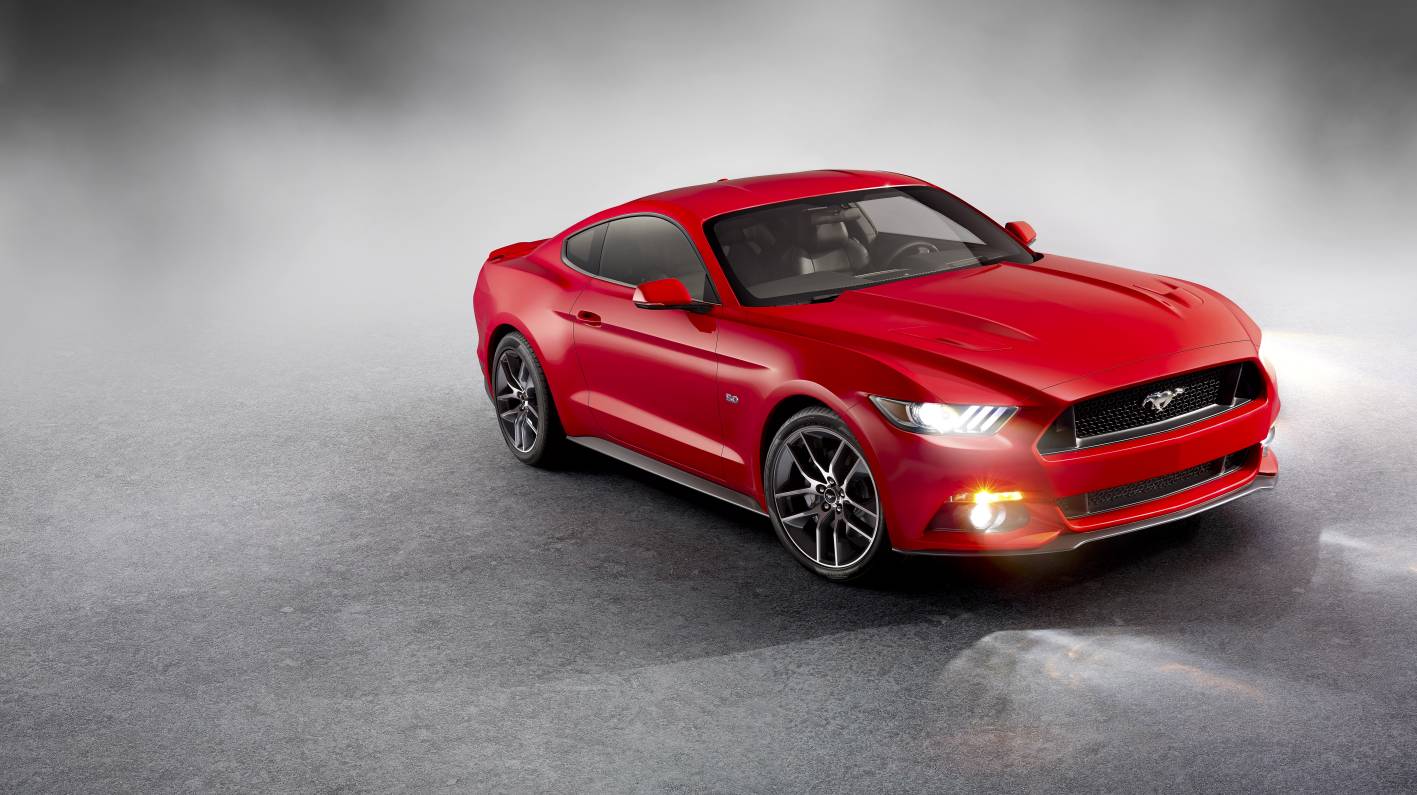
The all-new 2015 Ford Mustang has been simultaneously revealed around the globe overnight in six cities on four continents, including Sydney.
It will be the first time that Ford’s pony car is sold worldwide, with a range of engines to cater for every market, including a fuel-efficient 2.3-litre EcoBoost engine which will be available in Australia when the car arrives in 2016.
“Ford Mustang inspires passion like no other car,” said Raj Nair, Ford group vice president, global product development.
“The visceral look, sound and performance of Mustang resonates with people, even if they’ve never driven one. Mustang is definitely more than just a car – it is the heart and soul of Ford.”
The new car is built on an all-new platform with a significantly stiffer body structure and features fully independent suspension system specifically optimised and tuned to achieve a world-class blend of vehicle dynamics and improved ride quality. According to Ford, this is expected to be the quickest and most refined Mustang yet.
At the front, a new perimeter subframe helps to stiffen the structure while reducing mass, providing a better foundation for more predictable wheel control that benefits handling, steering and ride.
The new double-ball-joint front MacPherson strut system also enables the use of larger, more powerful brakes. This is expected to be the best stopping Mustang yet, with three available brake packages.
At the rear is an all-new integral-link independent rear suspension. The geometry, springs, dampers and bushings all have been specifically modified and tuned for this high-performance application. New aluminum rear knuckles help reduce unsprung mass for improved ride and handling.
The geometry of the suspension has been tuned to provide twice as much anti-squat, anti-lift and anti-dive force at each axle to help provide a more level body under acceleration or braking.
“We already set a very high standard for Mustang’s dynamics with Boss 302, and our goal was to go above and beyond that with this new car,” said Dave Pericak, Ford Mustang chief engineer.
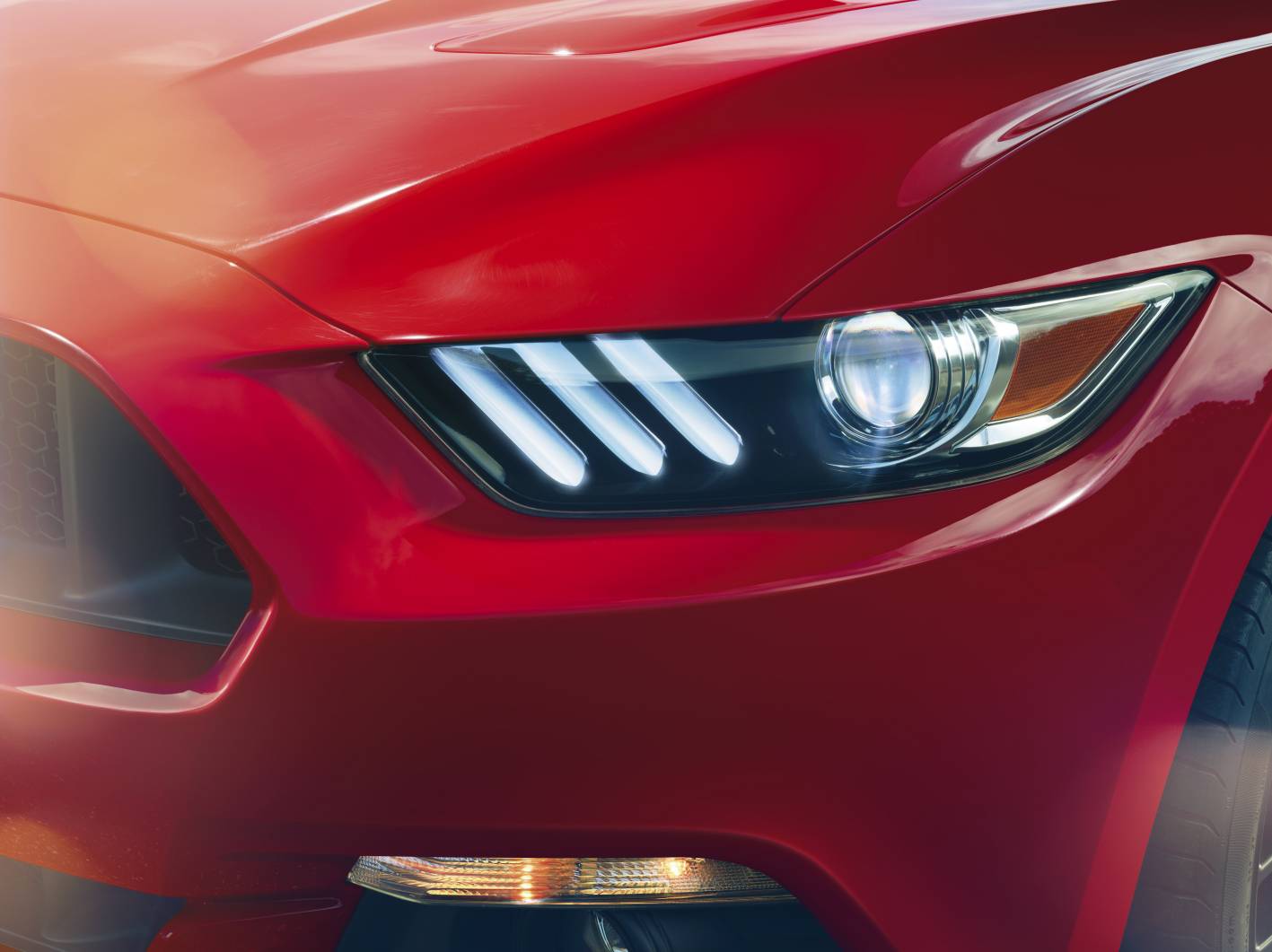
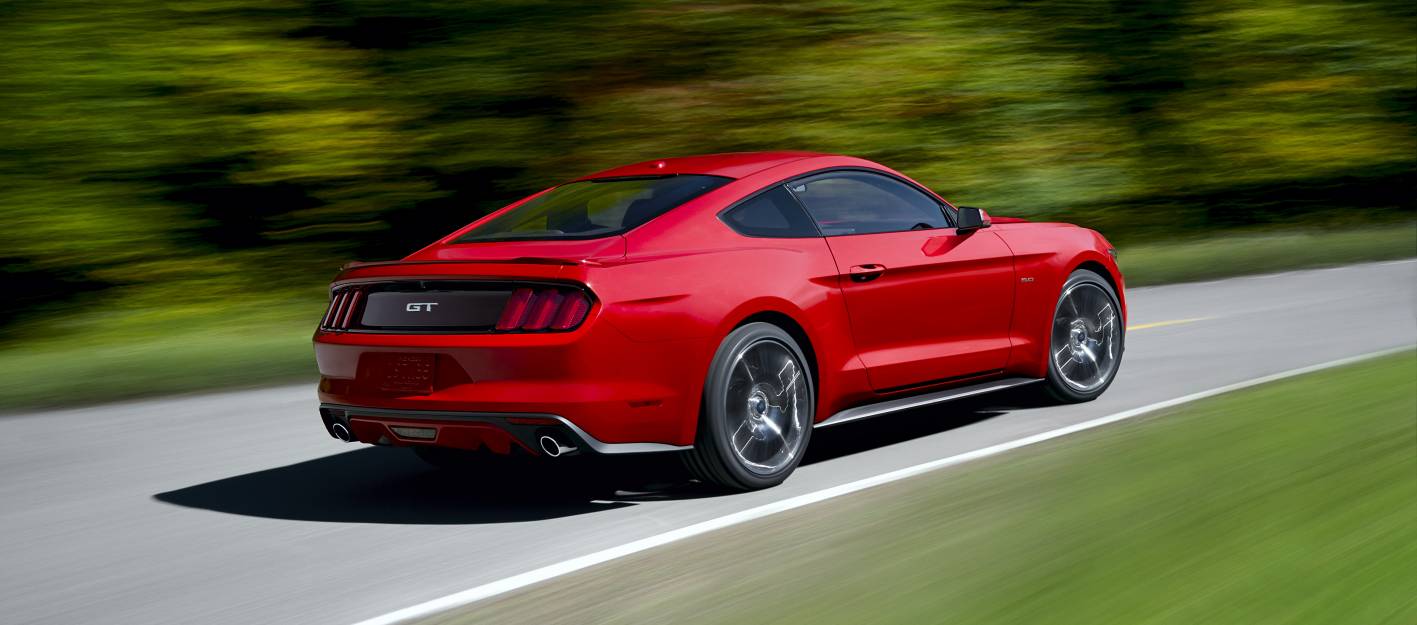
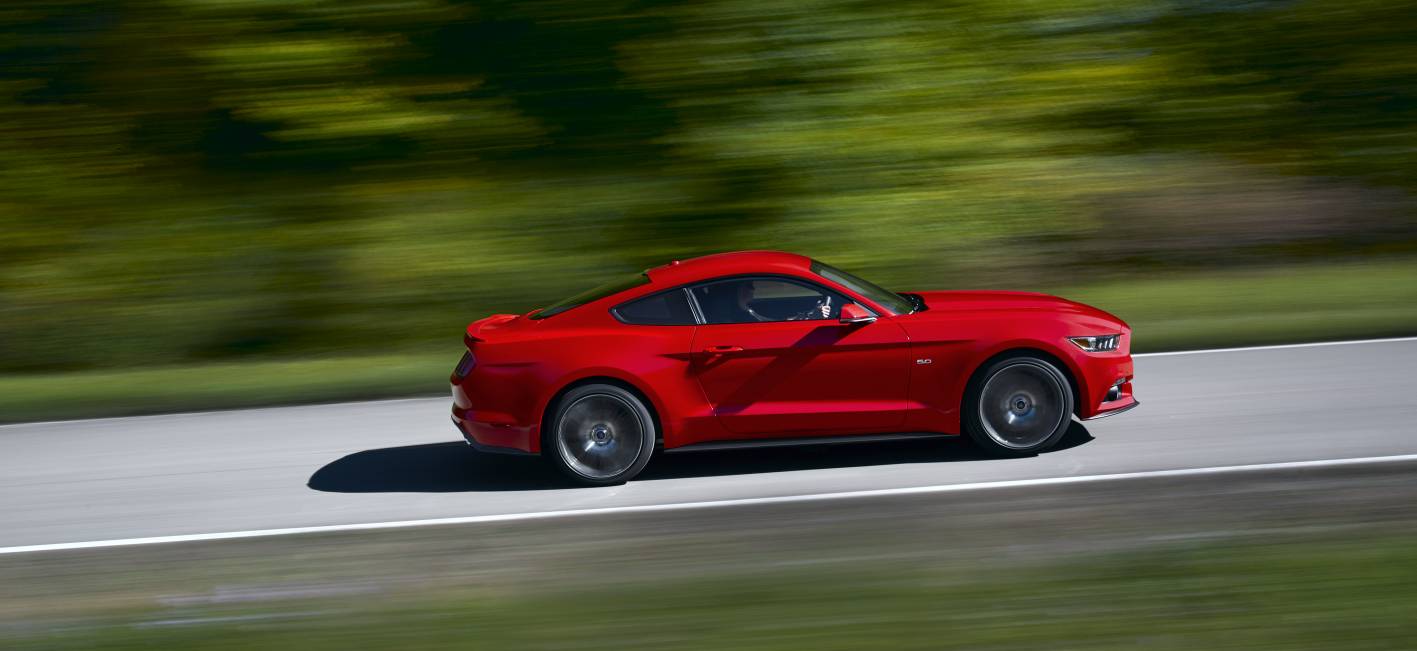
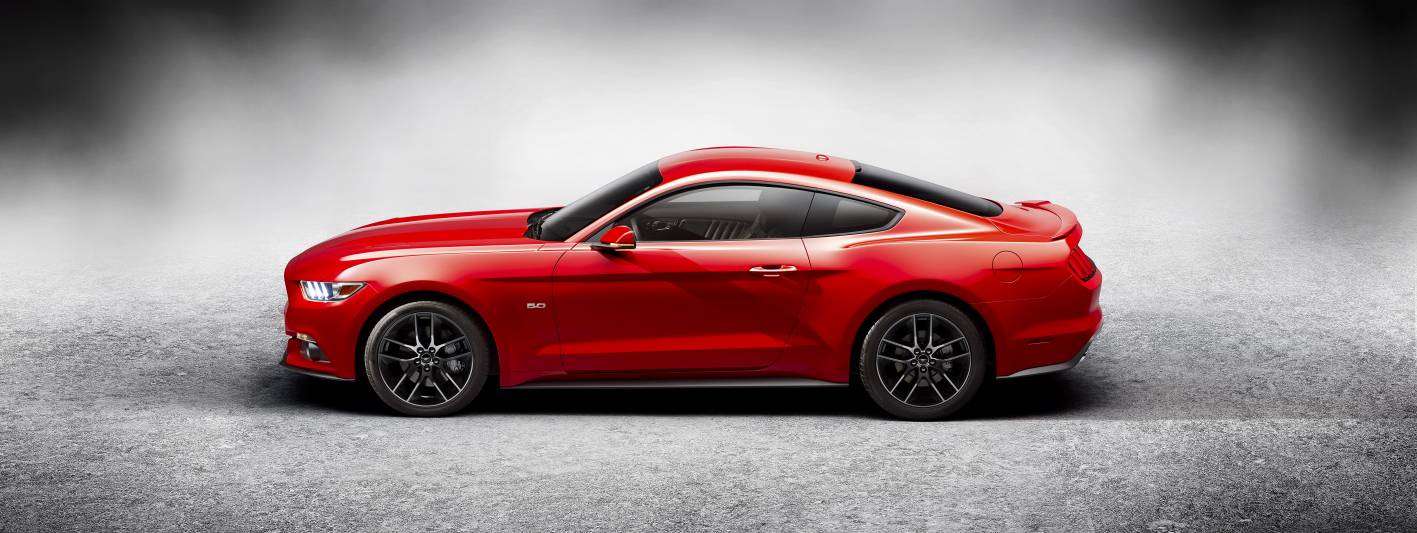
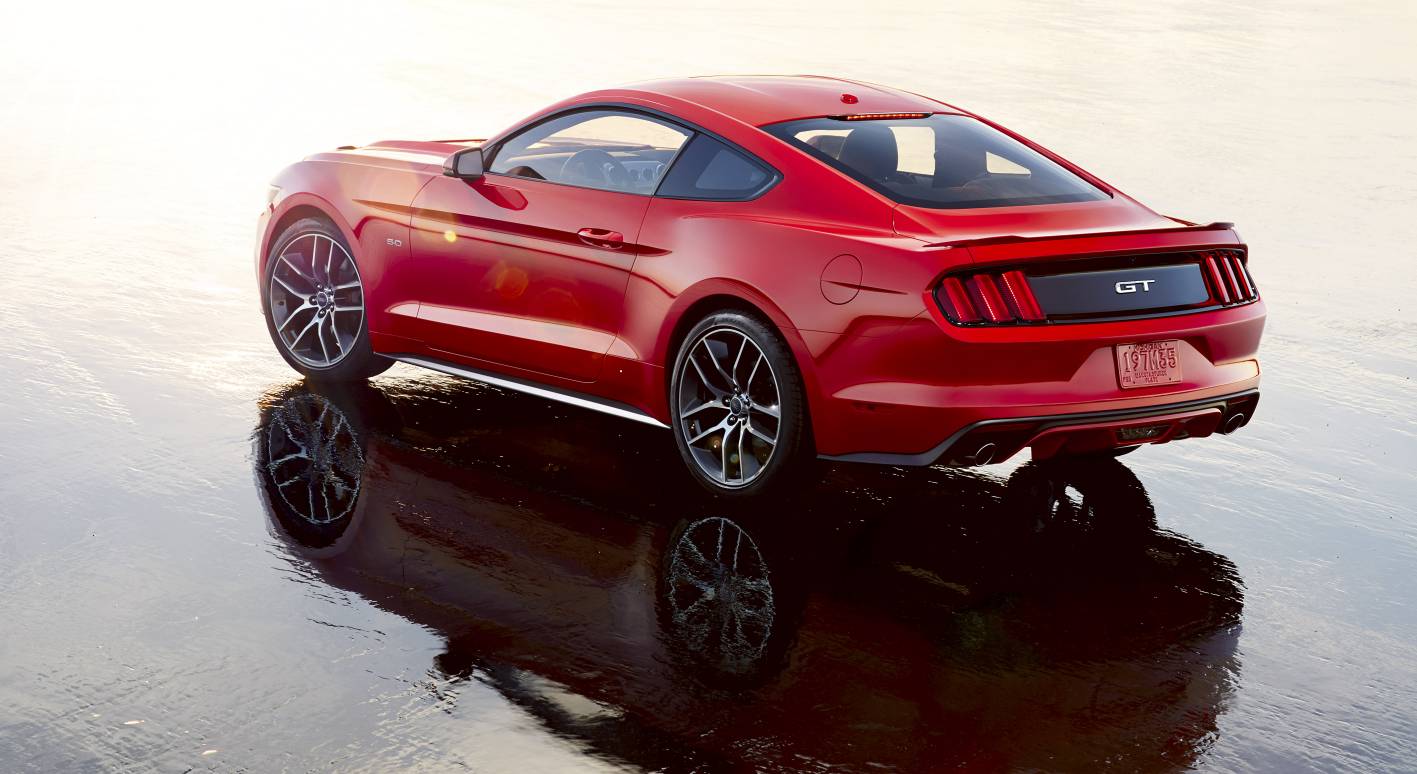
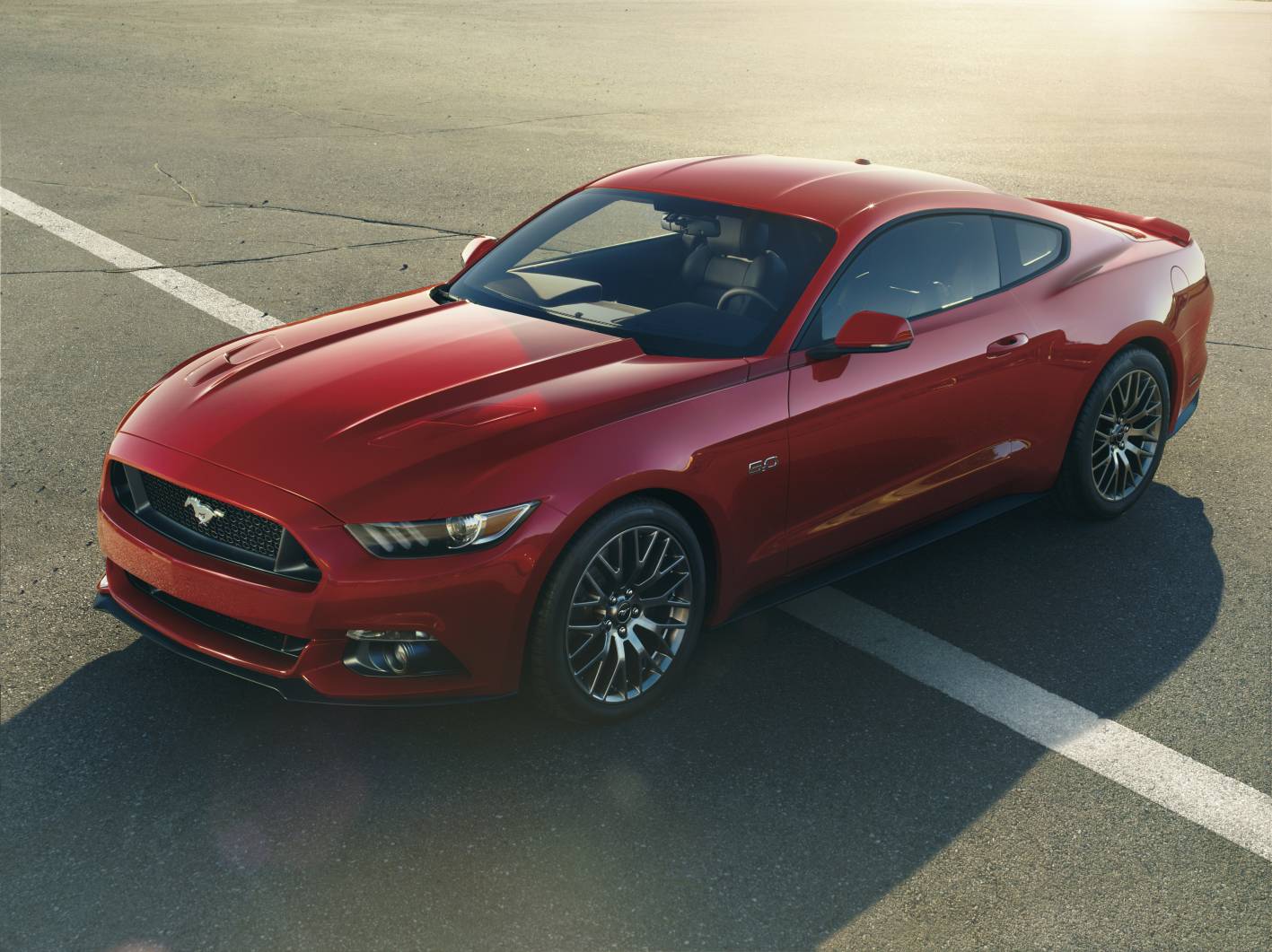
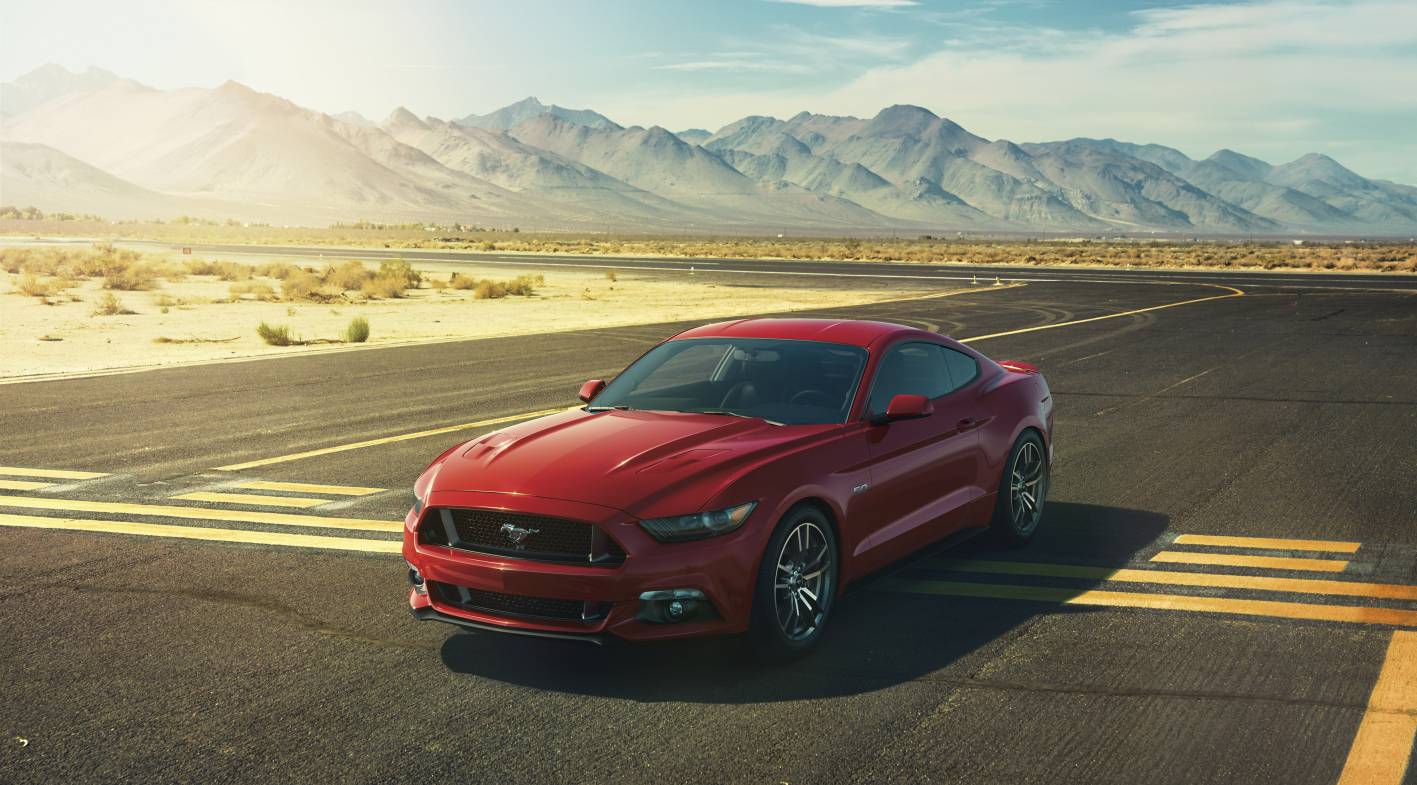
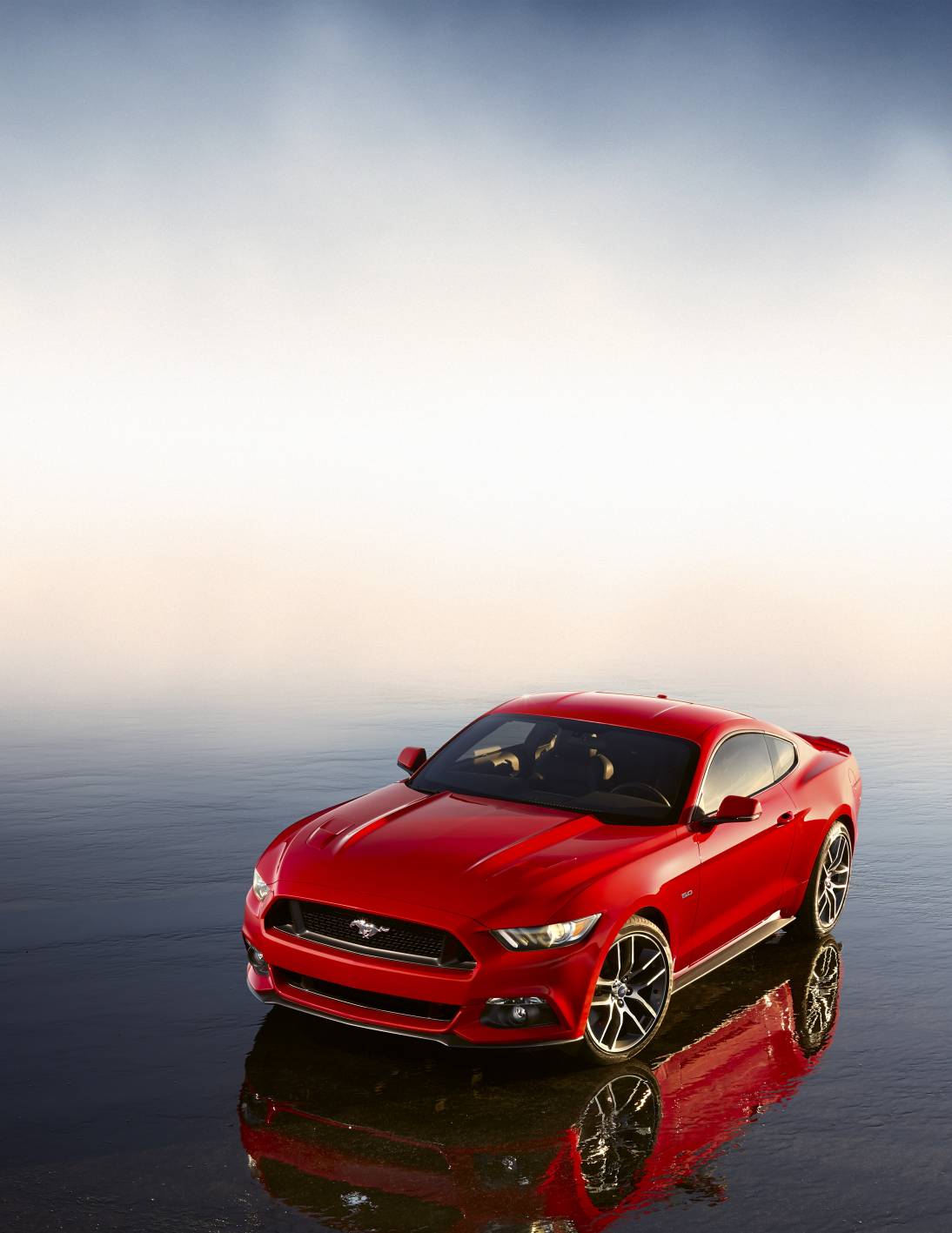
The Ford Mustang’s all-new shape is unmistakably Mustang. Several key design features define the new car, including:
- A lower, wider stance with a reduction in roof height, and wider rear guards and track
- The return of Mustang fastback with a sleeker profile enabled by more steeply sloped windshield and rear glass
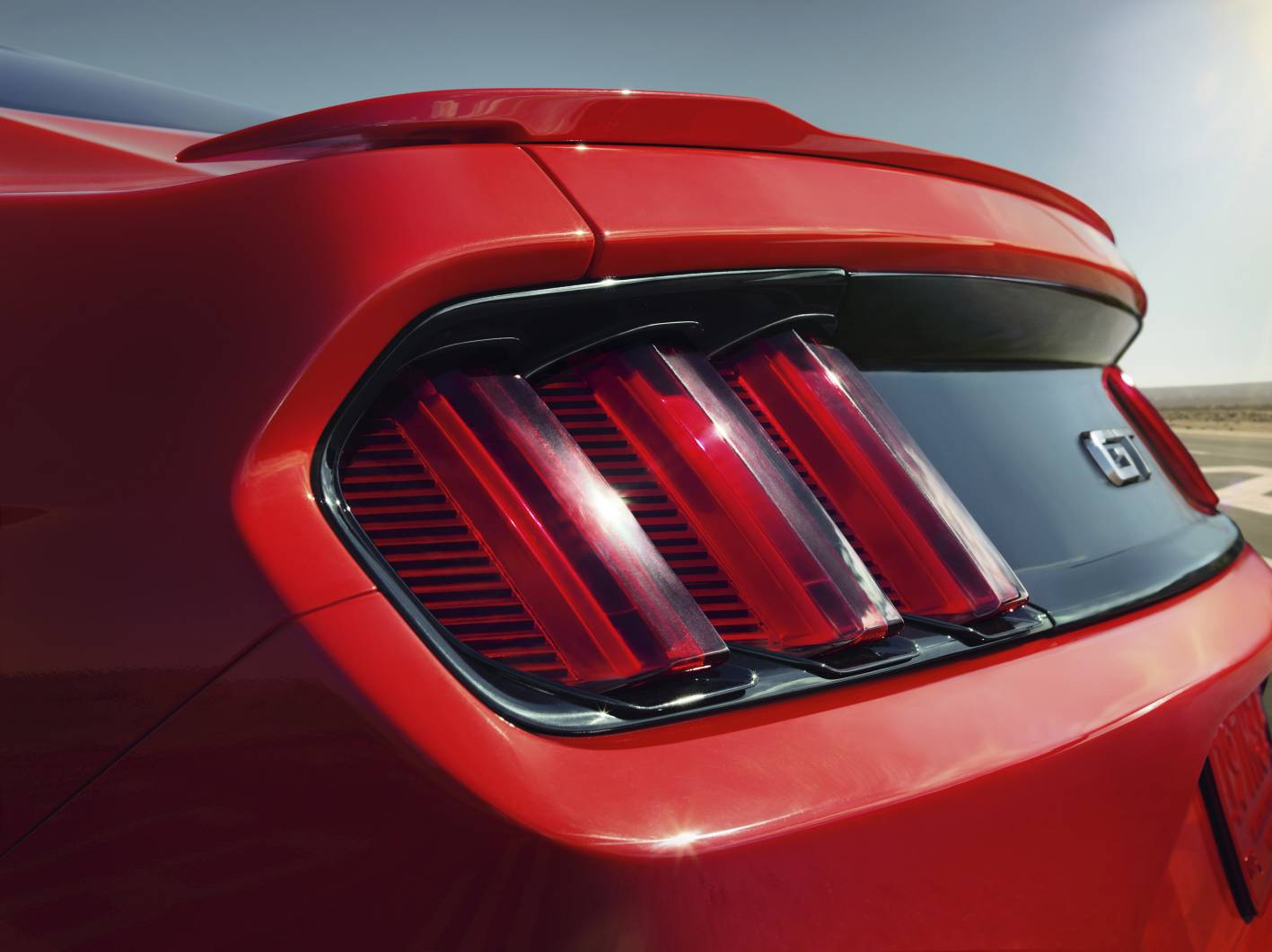
- Three-dimensional, tri-bar taillamps with sequential turn signals
- Contemporary execution of the signature shark-nose front fascia and trapezoidal grille
Mustang convertible drivers will appreciate the standard multilayer insulated cloth top that gives the car a more upscale appearance and a quieter cabin. The new top lowers twice as fast as before, and has a sleeker profile when folded for open-air motoring.
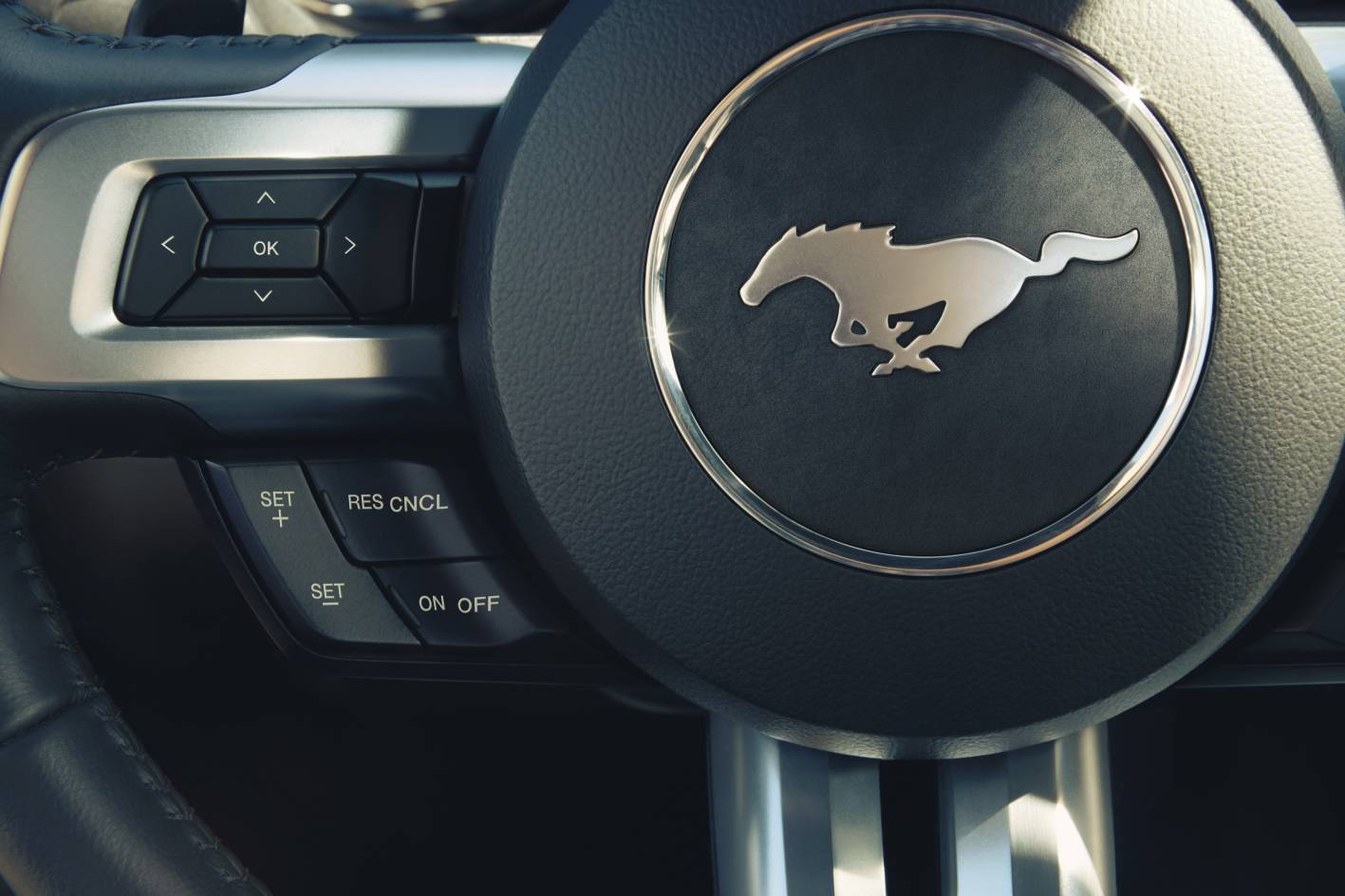
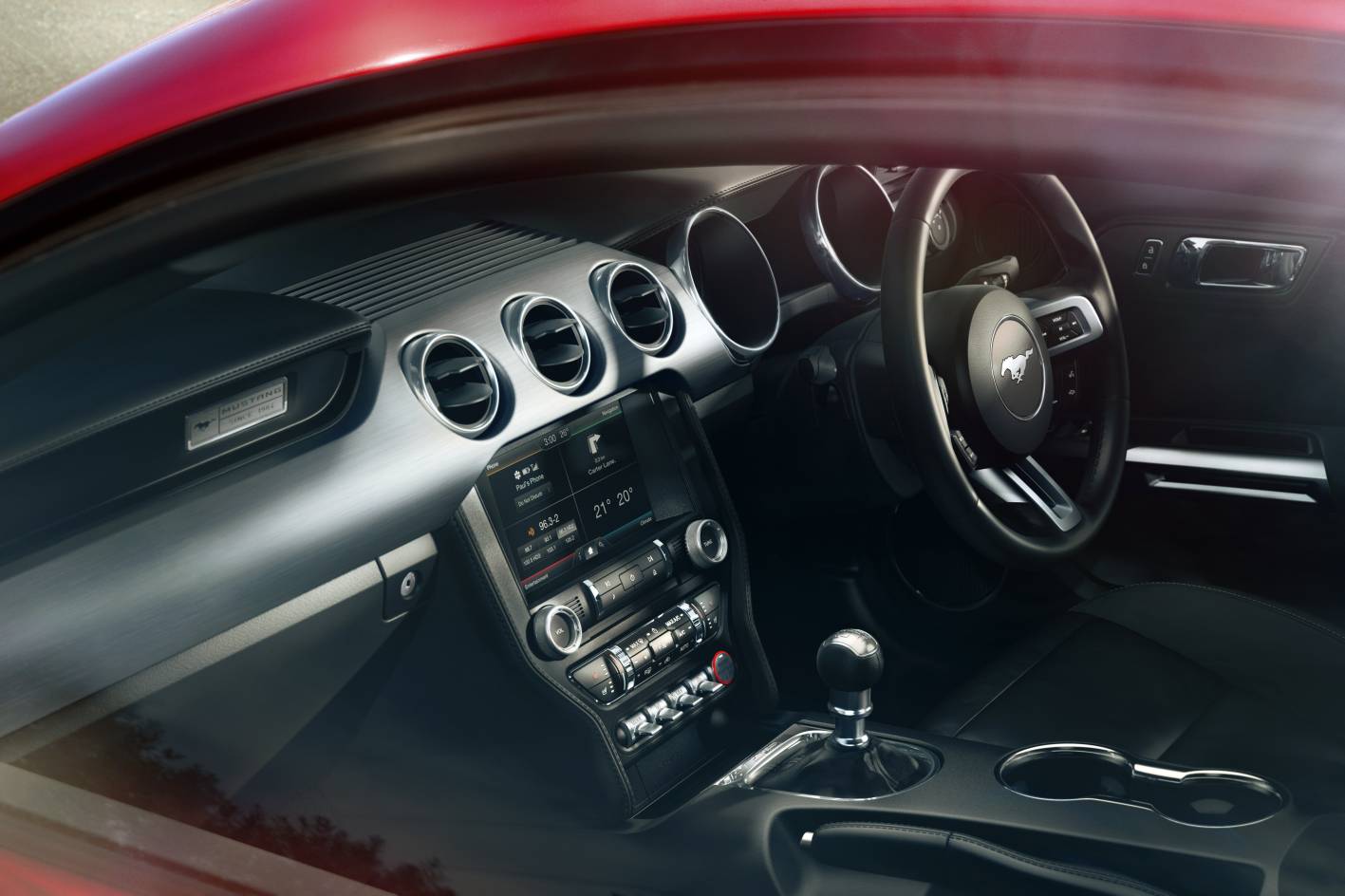
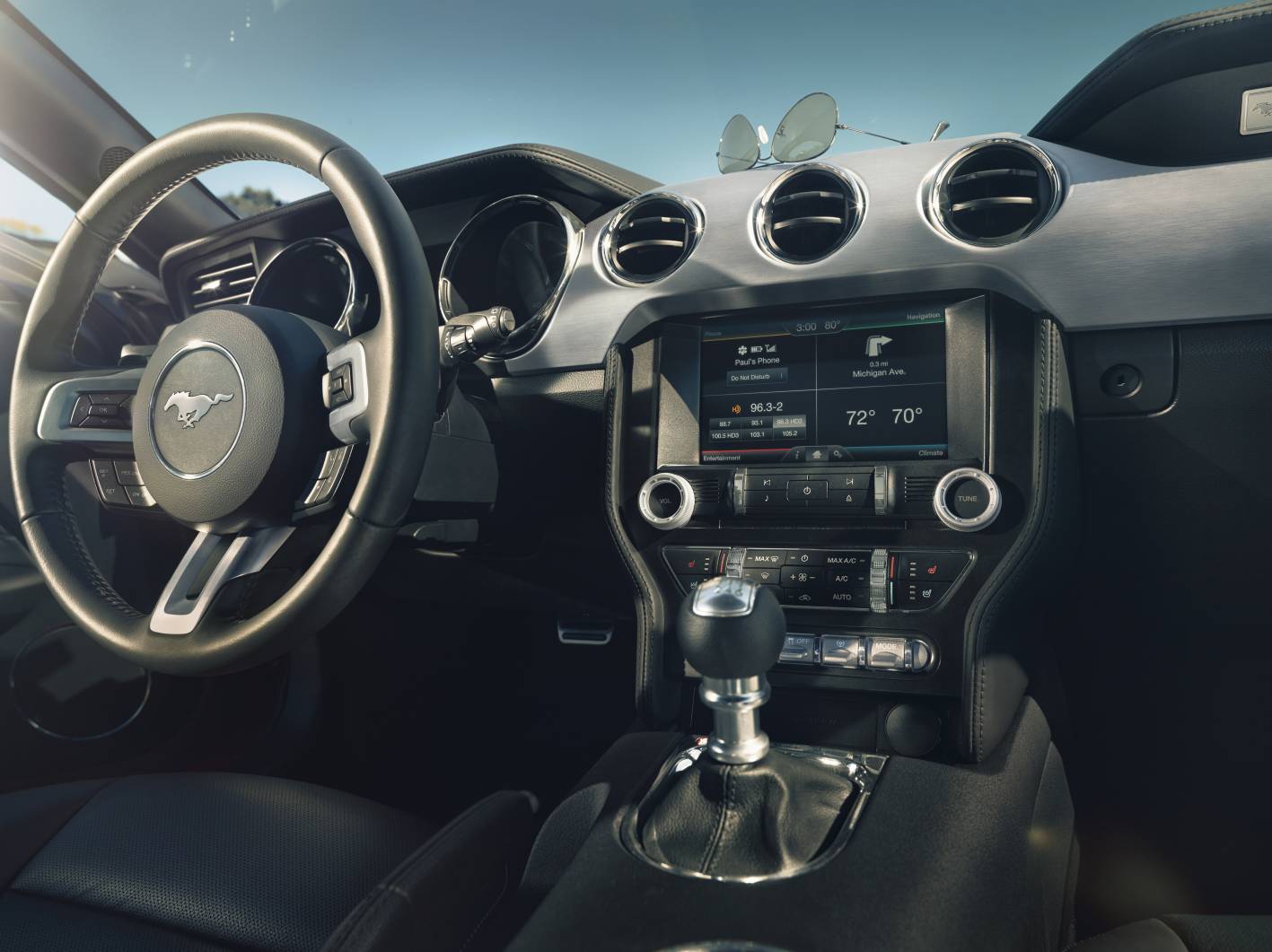
The information and controls an active driver needs are all readily accessible in the aviation-inspired cockpit, with large, clear instrumentation.
For the first time in a Mustang, the car is available with a fuel-efficient 2.3-litre EcoBoost engine that uses direct injection, variable cam timing and turbocharging to deliver 227kW and 407Nm.
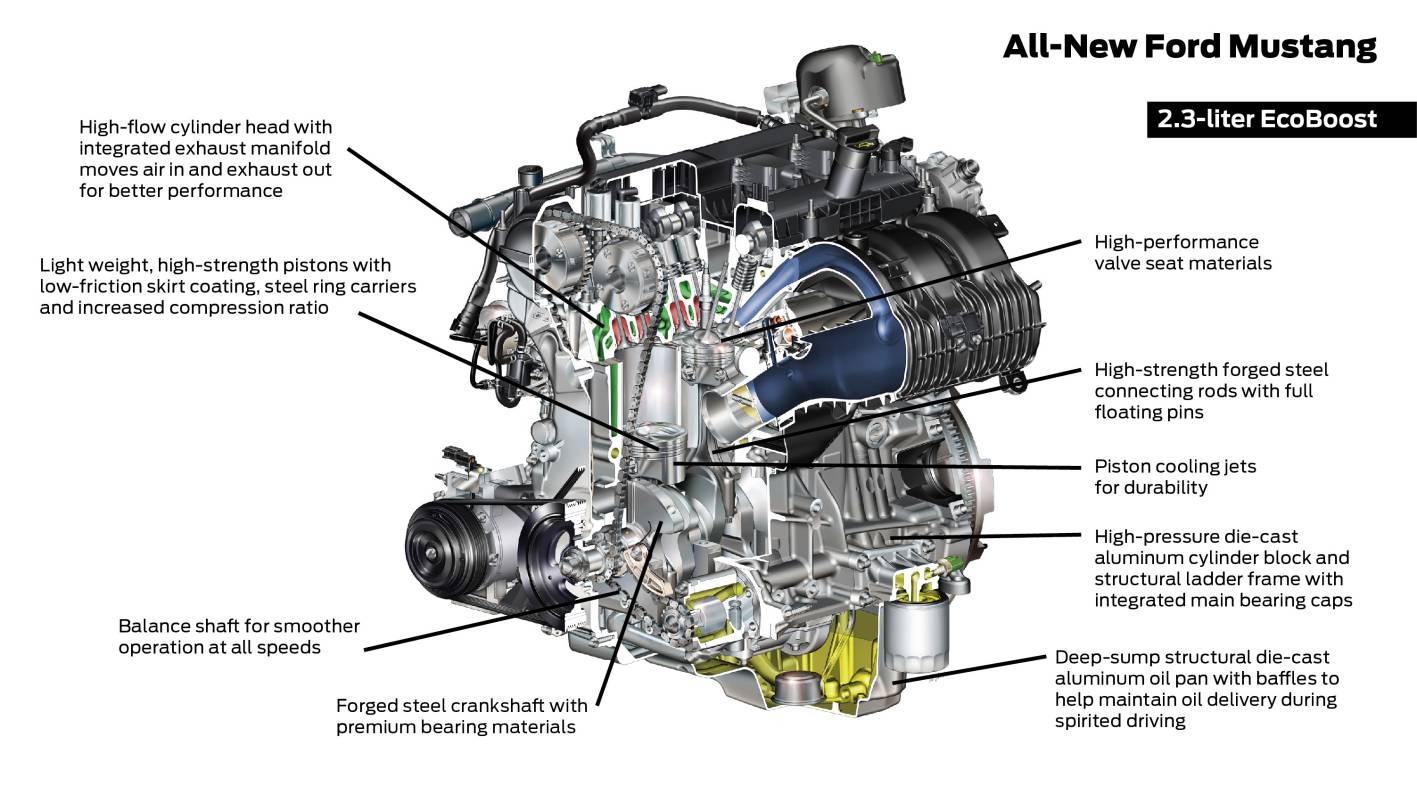
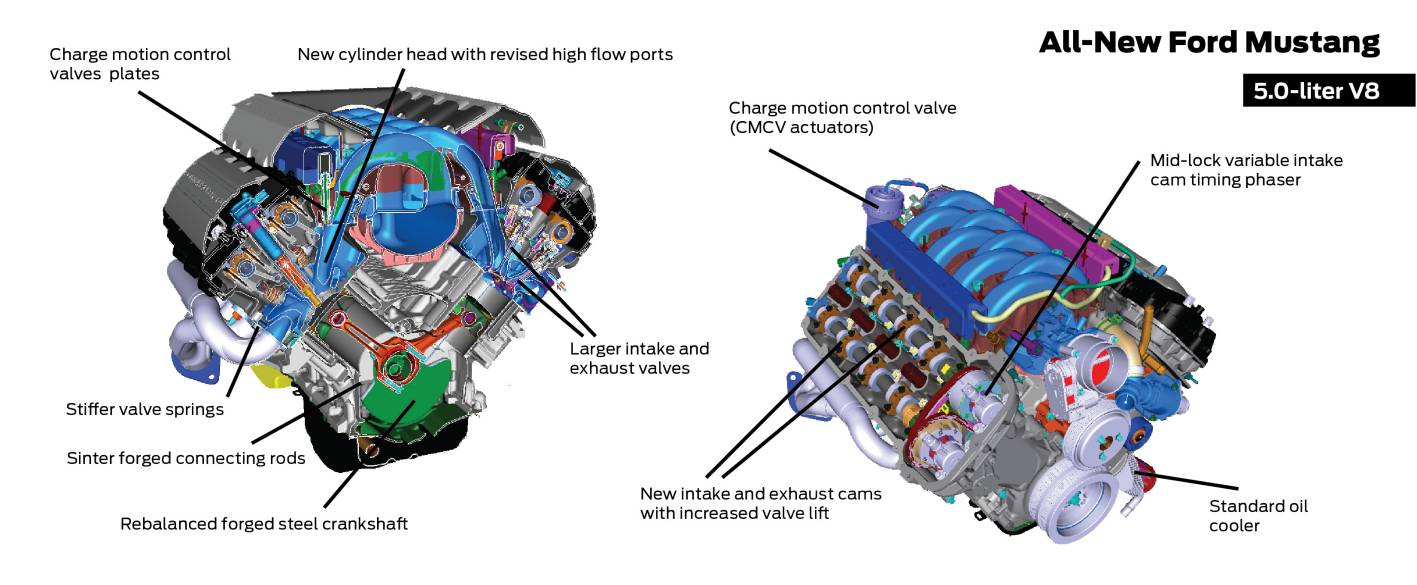
While the US also gets a 229kW and 366Nm 3.7-litre V6, Australians will instead get the throaty 5.0-litre V8 that features upgraded valvetrain and cylinder heads to yield more than 313kW and 529Nm. A new intake manifold improves low-speed breathing for better fuel economy, idle stability and emissions.
Both powertrains are paired with a six-speed manual with Hill Start Assist. A six-speed automatic with paddle shifters is available as an option.
The 2.3-litre EcoBoost Mustang is fitted with 352mm four-piston ventilated disc up front and 330 single-piston ventilated disc at the back, while the V8 model is equipped with 380mm six-piston Brembo brakes up front and 330mm single-piston vented disc at the back.
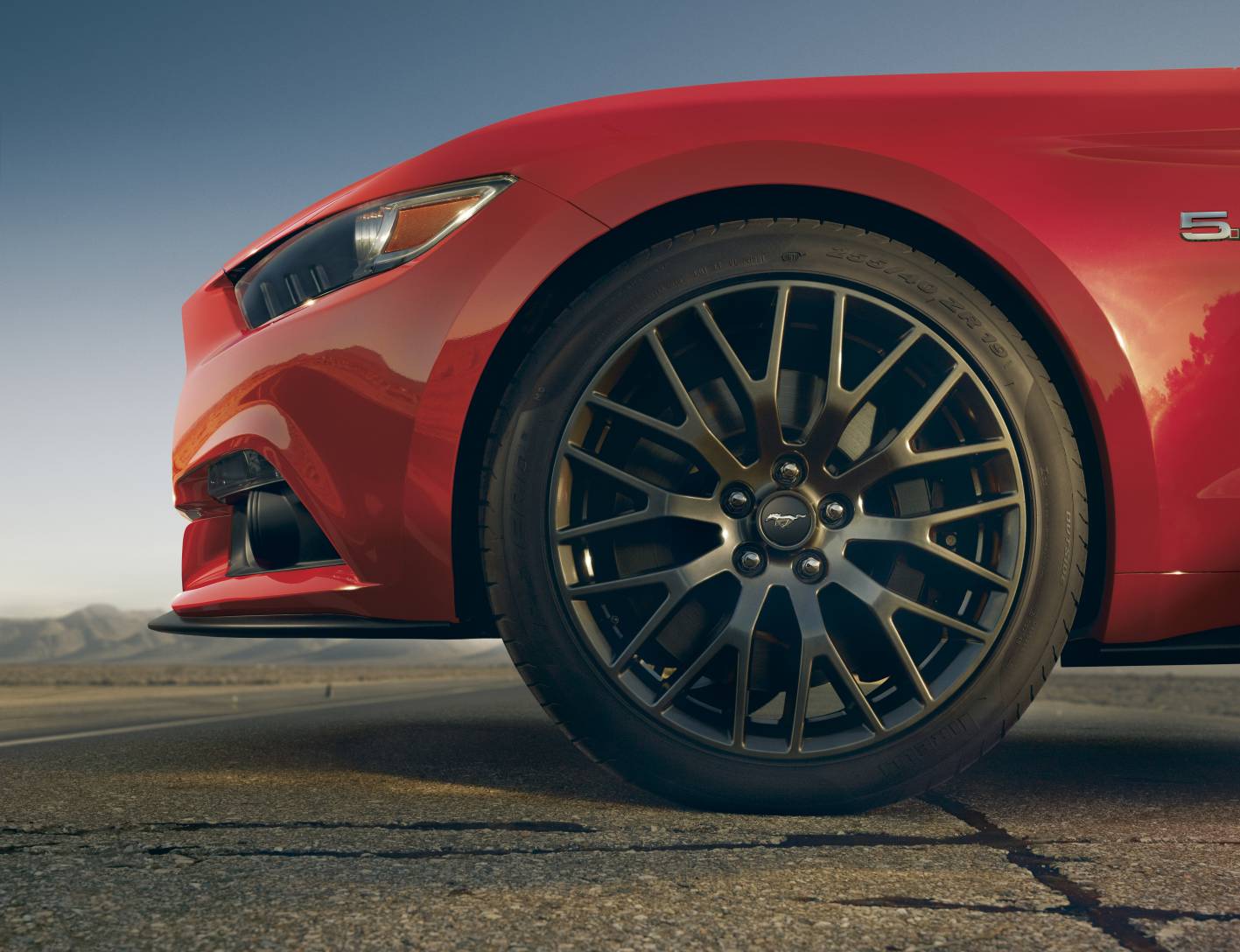
Both cars ride on 19-inch alloy wheels with the EcoBoost shod with 255/40R19 Y-rated tyres, while the V8 wears 255/40R19 front and 275/40R19 rear.
| BODY | ||
| Construction | Unitized welded steel body, aluminum hood and front fenders | |
| Body Styles | Fastback and Convertible, Right-hand drive | |
| Final assembly location | Flat Rock, Mich. | |
| ENGINE | ||
| 2.3-litre GTDI I4 | 5.0-litre Ti-VCT V8 | |
| Configuration | Aluminum block and head | Aluminum block and heads |
| Intake manifold | Composite shell-welded with runner pack | Composite shell-welded with runner pack and charge motion control valves |
| Exhaust manifold | Three-port integrated into aluminum head | Stainless steel tubular headers |
| Valvetrain | DOHC, four valves per cylinder, twin independent variable camshaft timing | DOHC, four valves per cylinder, twin independent variable camshaft timing |
| Valve diameter/lift | Intake 31 mm/8.31 mm, exhaust 30 mm/7.42 mm | Intake 37.3 mm/13 mm, exhaust 31.8 mm/13 mm |
| Pistons | Cast aluminum | Cast aluminum |
| Connecting rods | Forged steel | Forged steel |
| Ignition | Distributor-less with coil-on-plug | Distributor-less with coil-on-plug |
| Bore x stroke | 87.55 x 94 mm | 92.2 x 92.7 mm |
| Displacement | 2300 cc | 4951 cc |
| Compression ratio | 9.5:1 | 11.0:1 |
| Engine control system | PCM | PCM |
| Power | >227 kW @ 5500 rpm (Projected, US Spec) | >313 kW @ 6500 rpm (Projected, US Spec) |
| Torque | >407 Nm @ 2500-4500 rpm (Projected, US Spec) | >529 Nm @ 4250 rpm (Projected, US Spec) |
| Recommended fuel | 91 RON | 98 RON |
| Fuel capacity | 59 L | 61 L |
| Fuel delivery | Direct injection | Sequential multiport electronic |
| Oil capacity | 5.7 L 5W-30 with filter (16,000-km service interval) | 7.6 L 5W-20 with filter (16,000-km service interval) |
| DRIVETRAIN | ||
| Layout | Rear-wheel drive with limited-slip differential | |
| TRANSMISSION | ||
| 2.3-litre GTDI I4 | 5.0-litre Ti-VCT V8 | |
| Standard | Six-speed manual with Hill Start Assist | |
| Gear ratios | ||
| First | 4.236 | 3.657 |
| Second | 2.538 | 2.430 |
| Third | 1.665 | 1.686 |
| Fourth | 1.238 | 1.315 |
| Fifth | 1.00 | 1.00 |
| Sixth | 0.704 | 0.651 |
| Final drive | 3.55:1 | 3.55:1 |
| Optional | Six-speed automatic with paddle shifters | |
| Gear ratios | ||
| First | 4.17 | |
| Second | 2.34 | |
| Third | 1.52 | |
| Fourth | 1.14 | |
| Fifth | 0.87 | |
| Sixth | 0.69 | |
| Final drive | 3.55:1 | |
| SUSPENSION | ||
| Front | Double-ball-joint independent MacPherson strut and tubular stabilizer bar | |
| Rear | Integral-link independent with coil springs, solid stabilizer bar, and twin-tube dampers (I4) or mono-tube dampers (V8) | |
| STEERING | ||
| Type | Electric power-assisted steering with rack-and-pinion gear | |
| Ratio | 16:1 | |
| Turning circle, kerb-to-kerb | 12.2 m | |
| BRAKES | ||
| 2.3-litre GTDI I4 | 5.0-litre Ti-VCT V8 | |
| Type | Four-wheel power disc brakes with four-sensor, four-channel anti-lock braking system and AdvanceTrac electronic stability control | Four-wheel power disc brakes with four-sensor, four-channel anti-lock braking system and AdvanceTrac electronic stability control |
| Front | 352 x 32-mm vented discs, four-piston 46-mm fixed aluminum calipers | 380 x 34-mm vented discs, Brembo six-piston 36-mm fixed aluminum calipers |
| Rear | 330 x 25-mm vented discs, single-piston 45-mm floating iron calipers, integral parking brake | 330 x 25-mm vented discs, single-piston 45-mm floating iron calipers, integral parking brake |
| TYRES AND WHEELS | ||
| Standard | 255/40R19 Y-Rated Summer Tyres 19 x 9-in. aluminum wheels | F-255/40 R-275/40 R19 Y-Rated Summer Tires 19 x 9-in. (frt) + 19 x 9.5-in. (rear) alum. wheels |
| DIMENSIONS (mm) | ||
| Fastback | Convertible | |
| EXTERIOR | ||
| Wheelbase | 2720 | 2720 |
| Overall length | 4784 | 4784 |
| Overall width | 1916 | 1916 |
| Overall height | 1381 | 1394 |
| Track, front/rear | 1570/1637 | 1570/1637 |
| INTERIOR | ||
| Seating capacity | Four | Four |
| Front headroom | 955 | 956 |
| Front legroom – maximum | 1131 | 1131 |
| Front shoulder room | 1430 | 1430 |
| Front hip room | 1395 | 1395 |
| Rear headroom | 884 | 907 |
| Rear legroom | 777 | 783 |
| Rear shoulder room | 1327 | 1135 |
| Rear hip room | 1203 | 1111 |
| CAPACITIES | ||
| Passenger volume | 2392 L | 2287 L |
| Cargo volume | 383 L (based on US SAE Spec) | 324 L (based on US SAE Spec) |