 ForceGT.com Car News, Car Reviews, Video Reviews, Tuning and much more.
After a long hiatus of 25 years, the Honda Prelude is back! This is a nameplate that stretches as far back as the late 70s, when the original Prelude was launched as a sporty 2-door coupe based largely on the Accord. It’s been a technology showcase for Honda ever since. Apart from being the first model in Japan to have an electric sunroof and four-wheel anti-lock brake system, the Prelude is most notable for introducing the world’s first four-wheel steering system in 1987. Then later in 1996, it pioneered torque vectoring, with its ATTS (Active Torque Transfer System) varying torque between the front wheels to reduce understeer.
Now in its sixth generation, the new Prelude is a refreshing sight in an SUV-dominated automotive landscape. With a relatively accessible price tag of $65,000 drive-away in Australia, the Prelude has been launched as a focused, highly specified single-grade model designed to appeal to everyone from returning Prelude owners to new buyers simply drawn to its design.
But it’s not alone in the segment. The Toyota GR86 and Subaru BRZ twins cost significantly less at around $45,000 plus on-road costs. The Mazda MX-5 RF also undercuts the Prelude by quite a chunk at around $55,000 plus ORCs. That said, the Prelude, being a plush tourer, isn’t quite a direct rival to those lightweight sports cars. For those with more cash to burn, a Ford Mustang EcoBoost isn’t that far of a stretch away at $73,000 plus ORCs. Top up a few grand more and the Nissan Z is reachable at $76,000 plus ORCs.
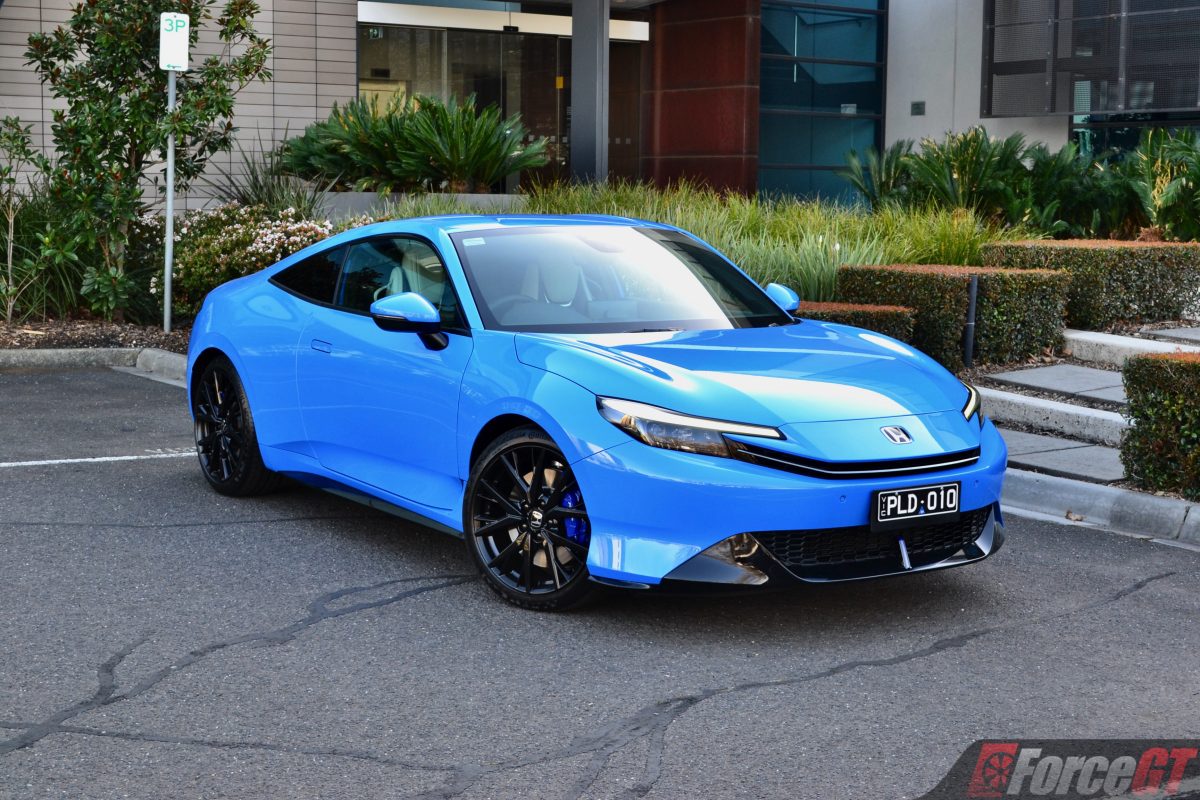
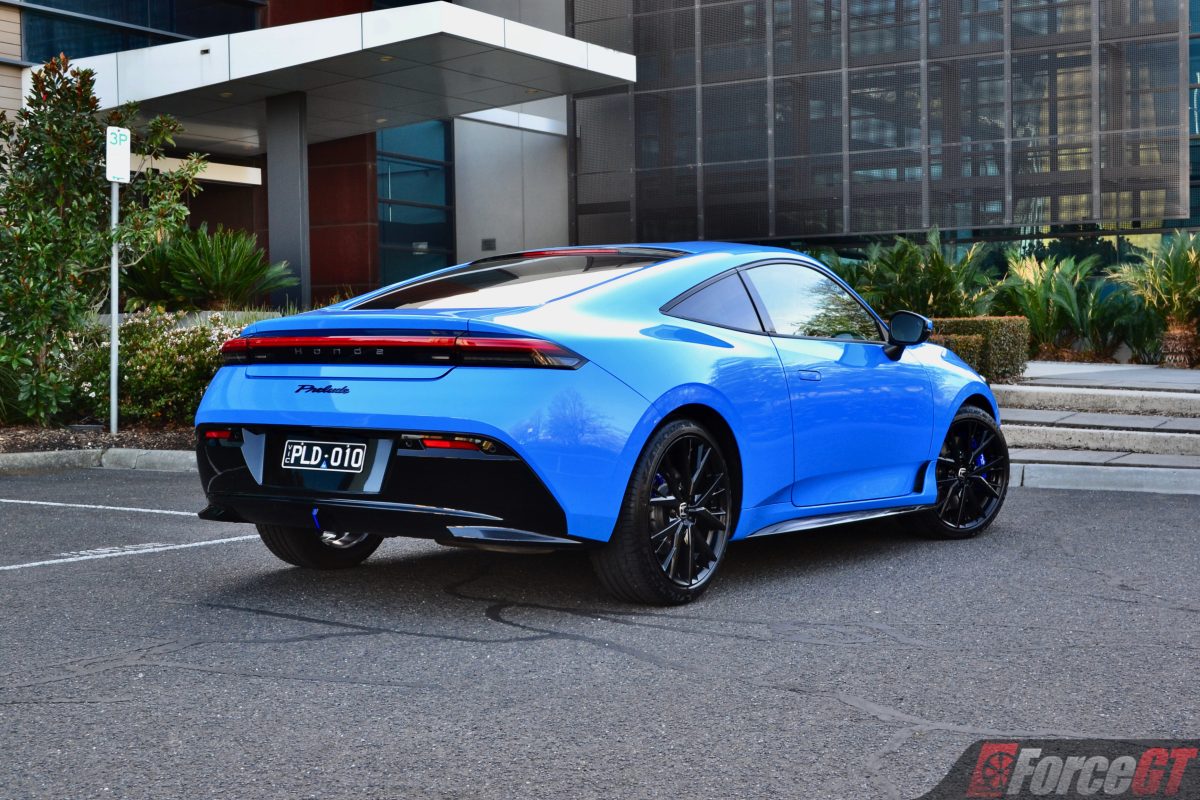
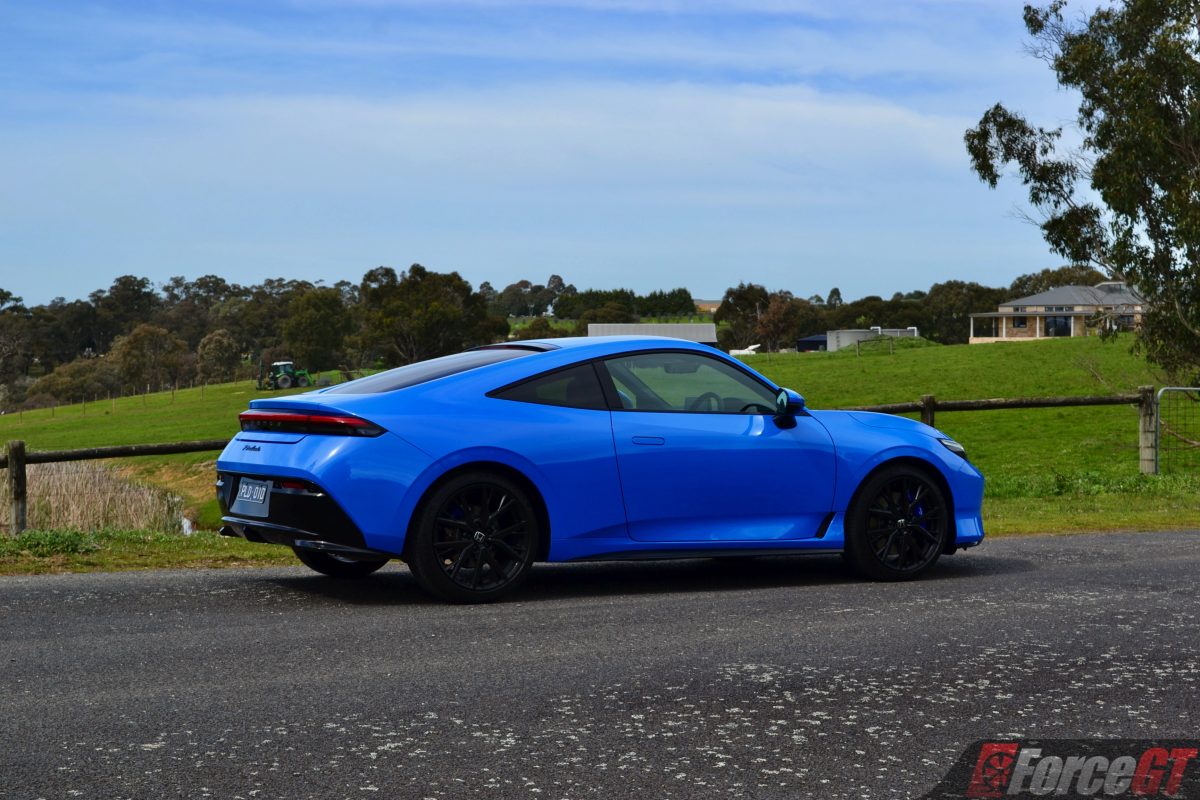
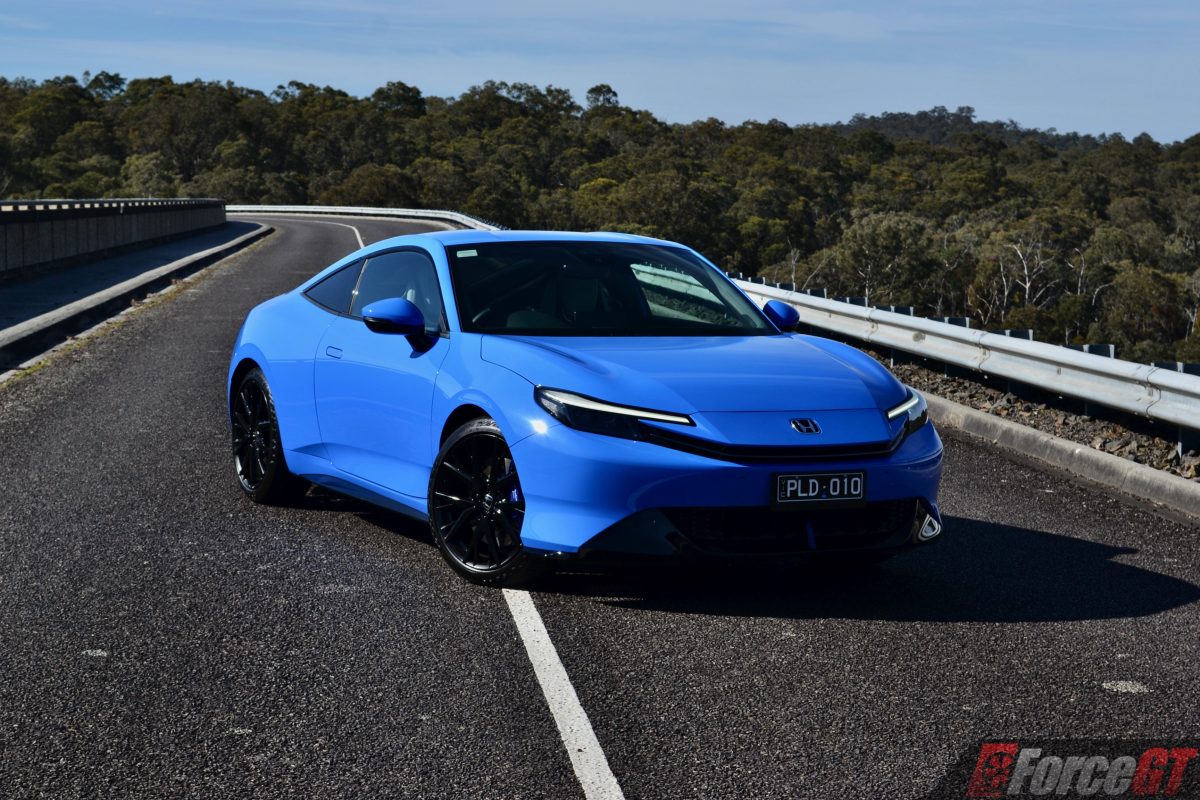
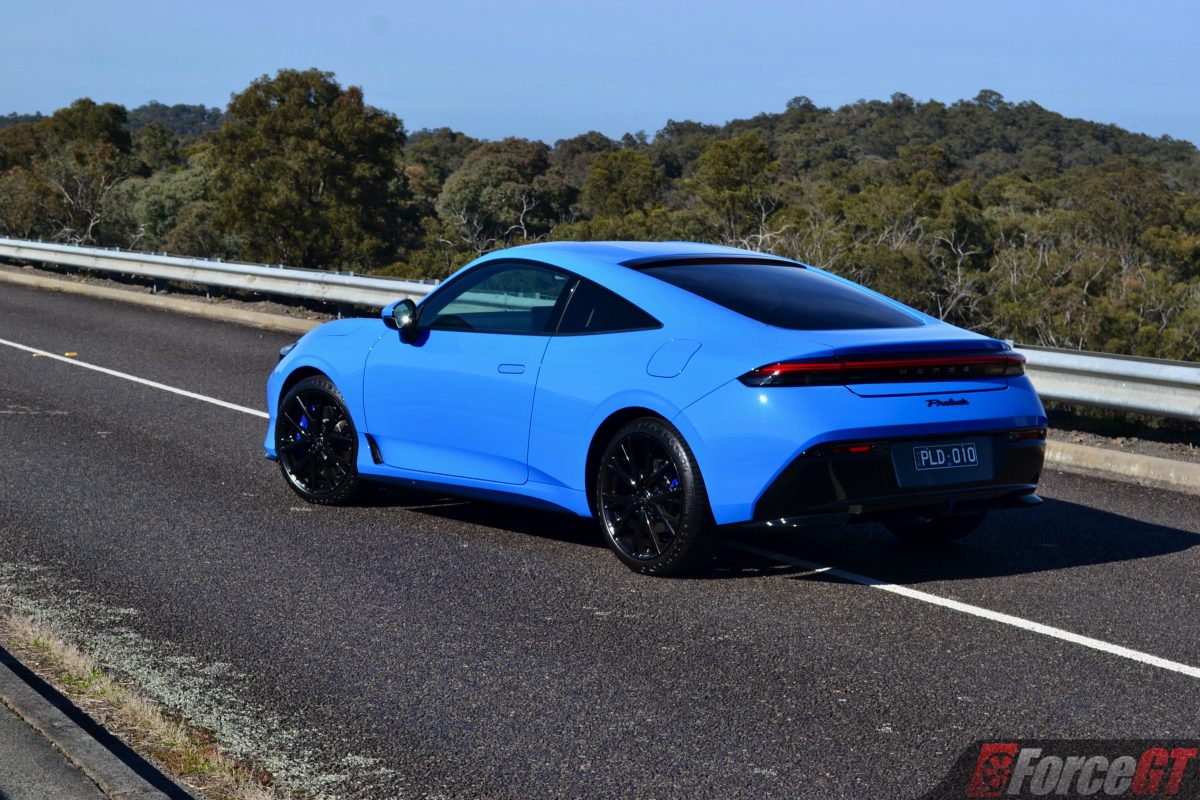
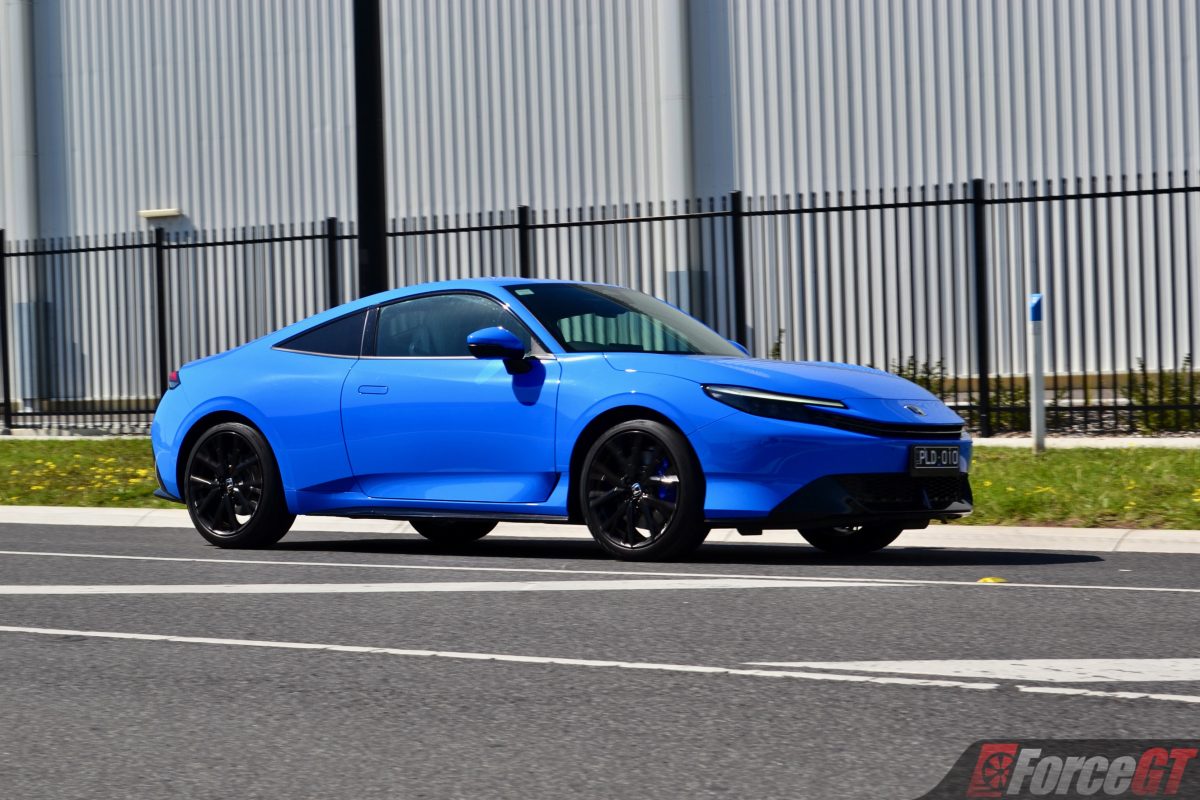
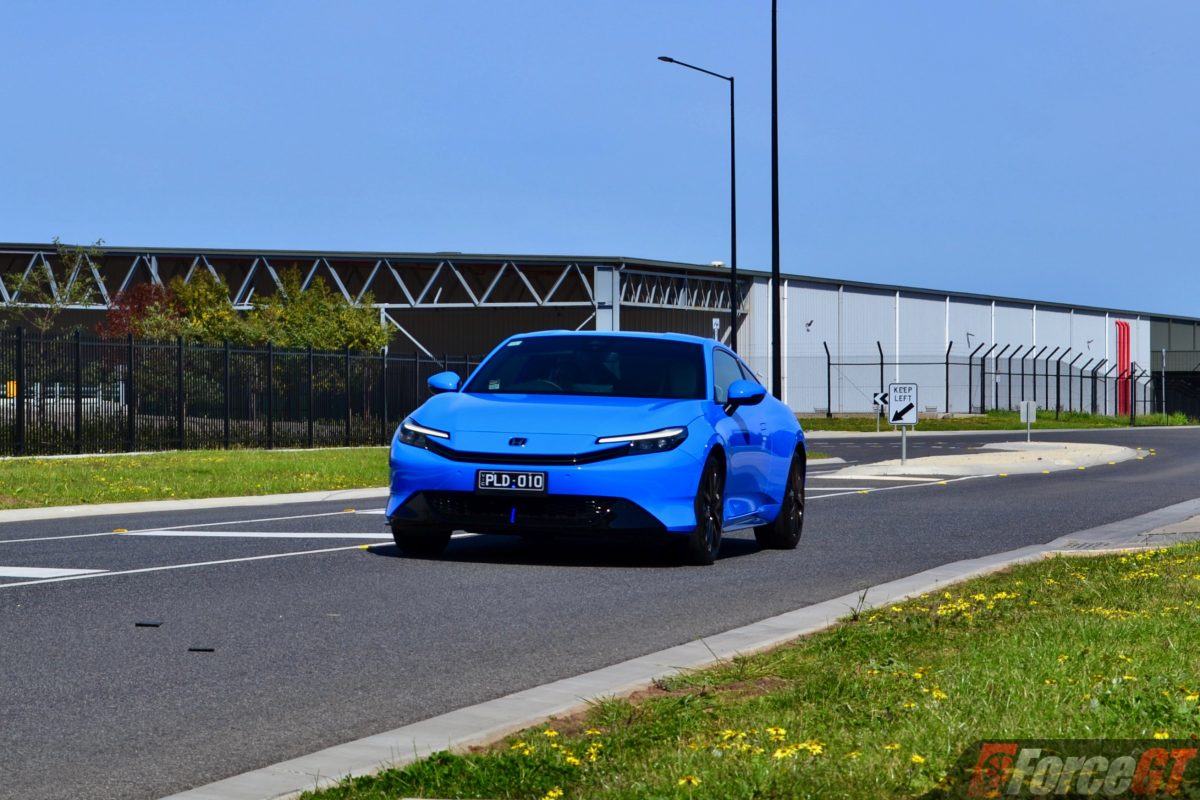
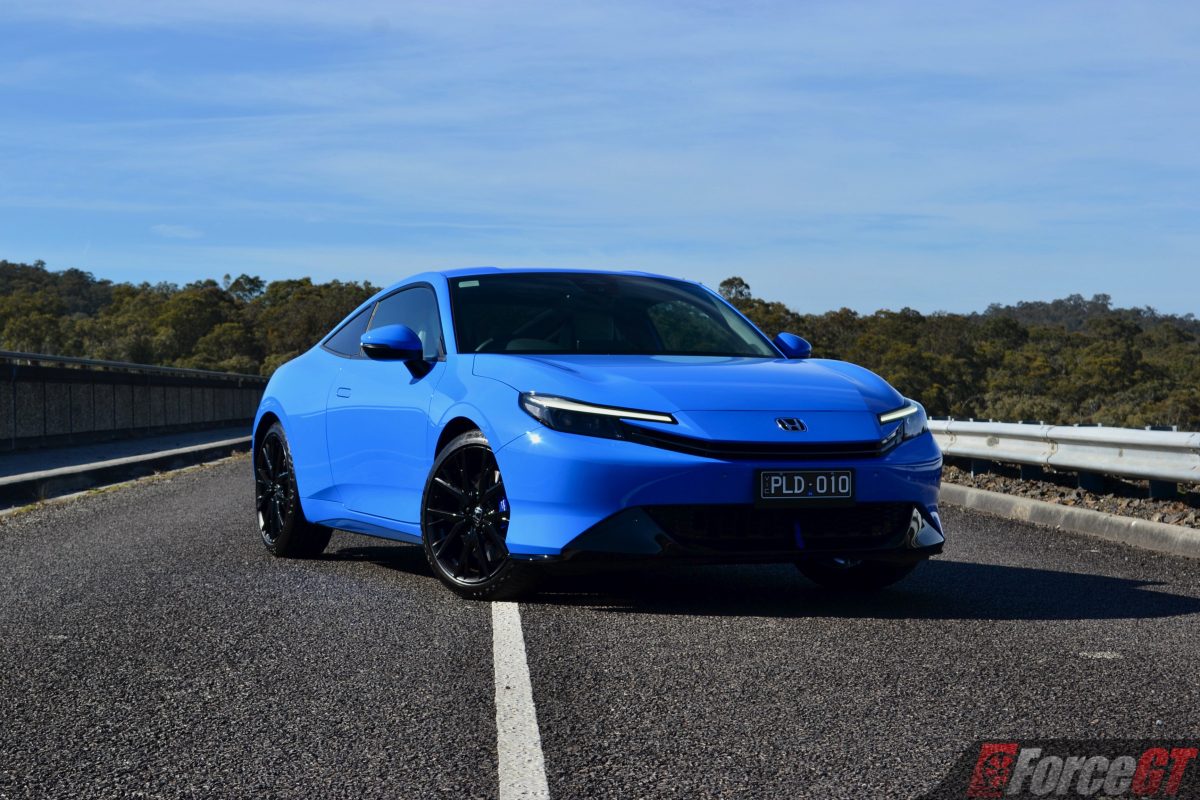
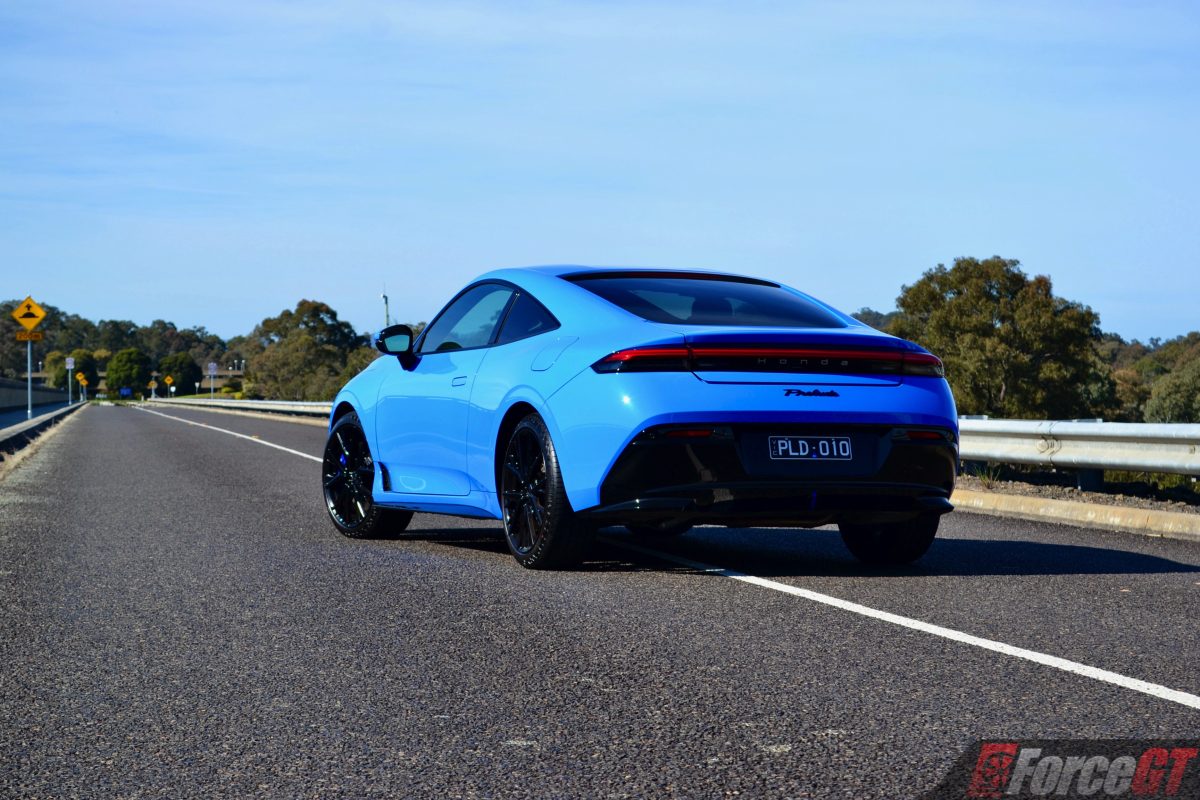
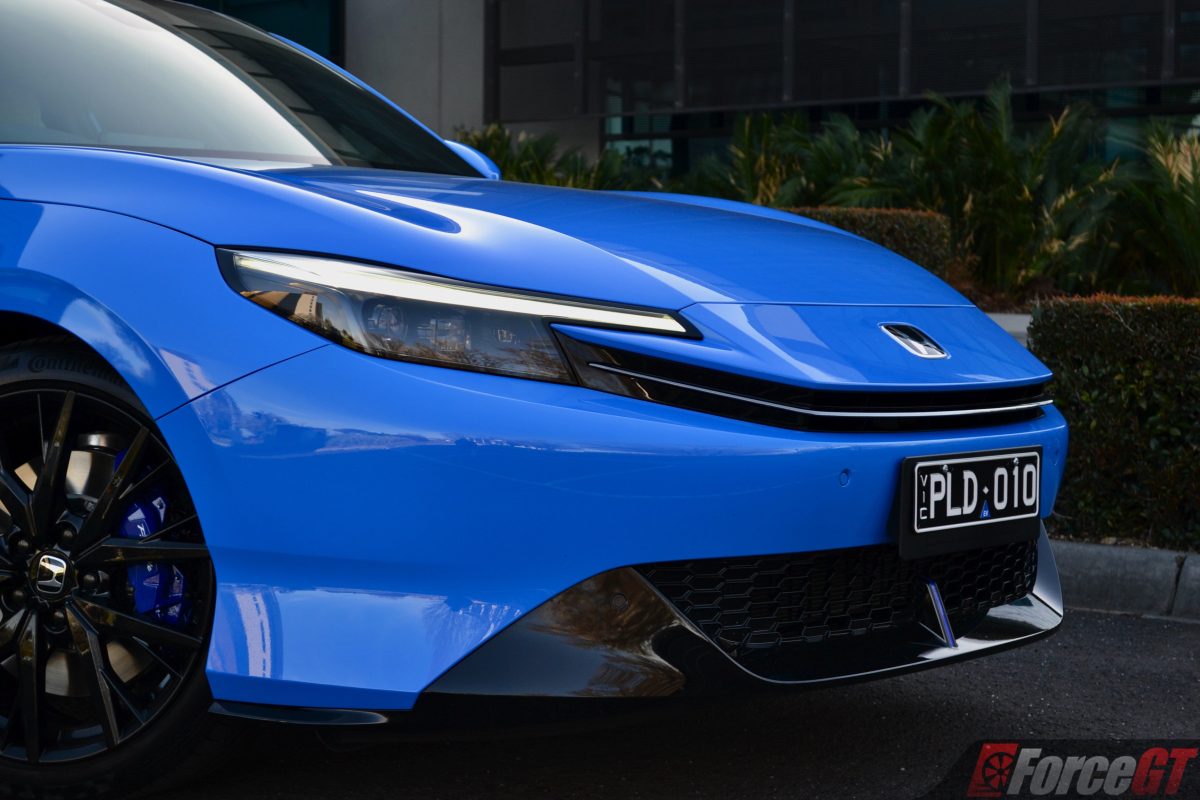
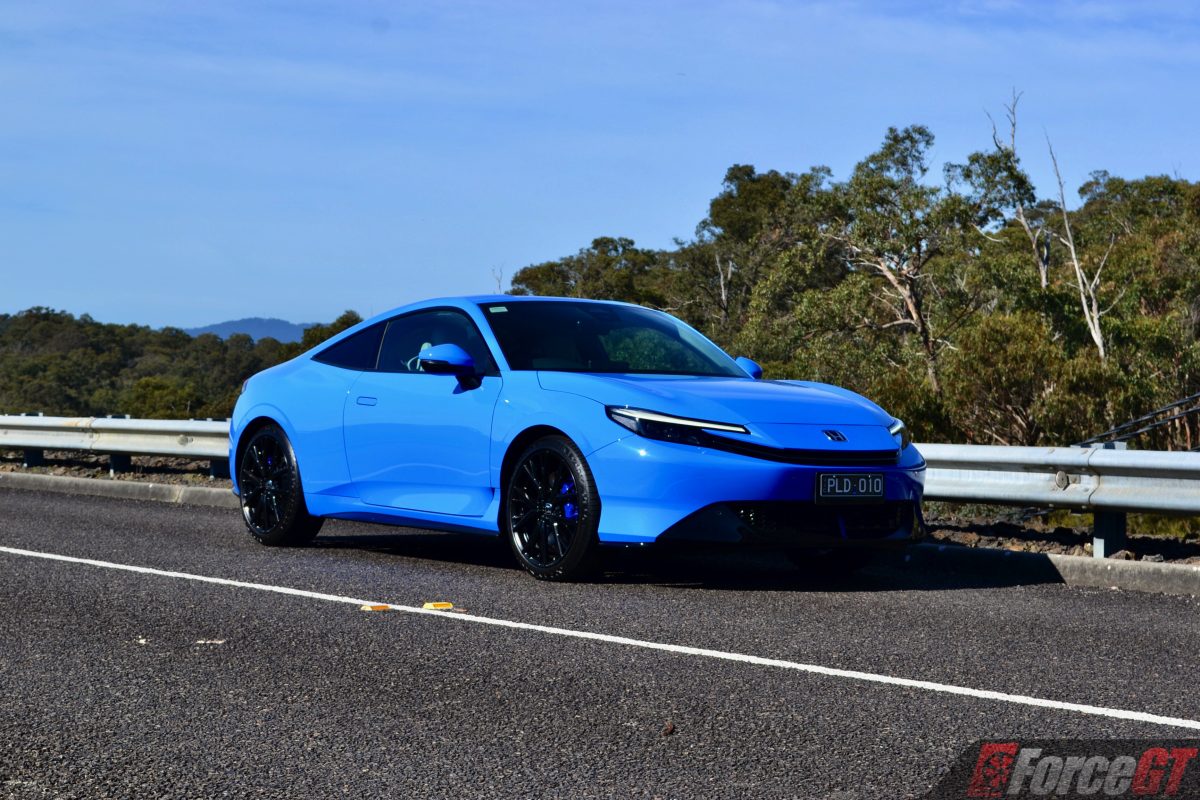
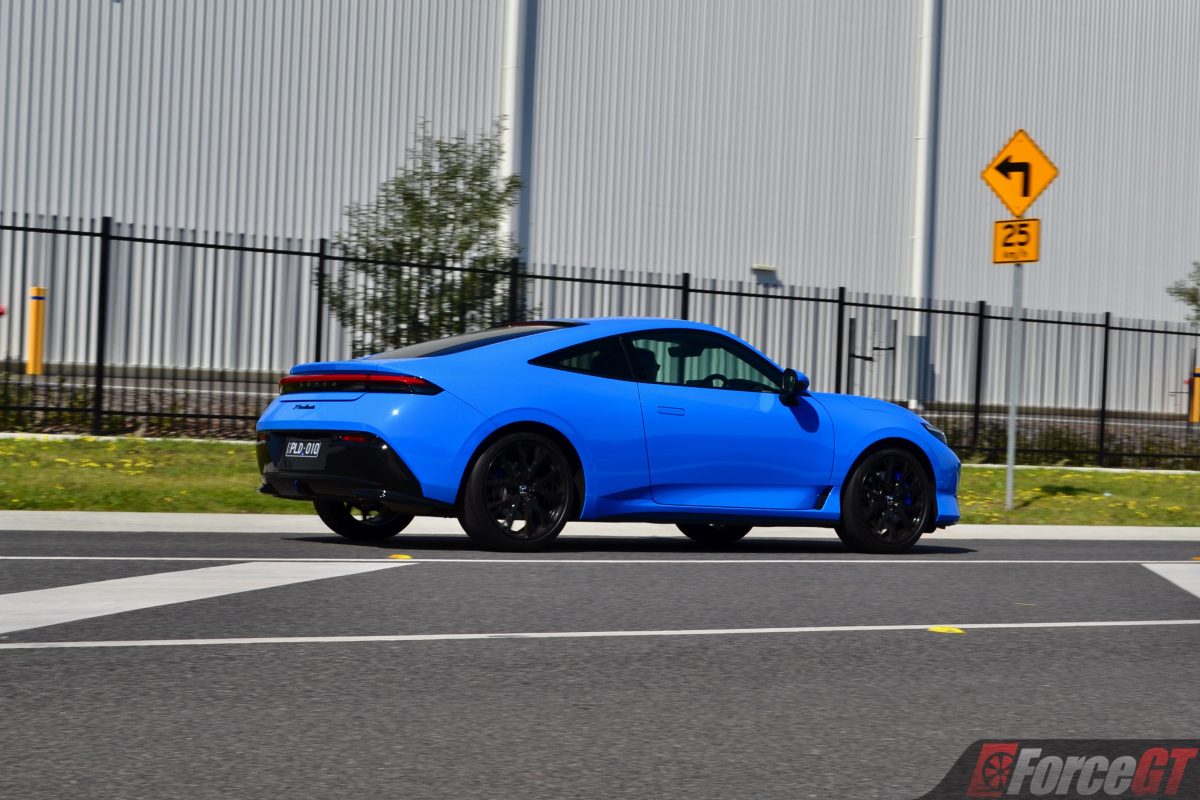
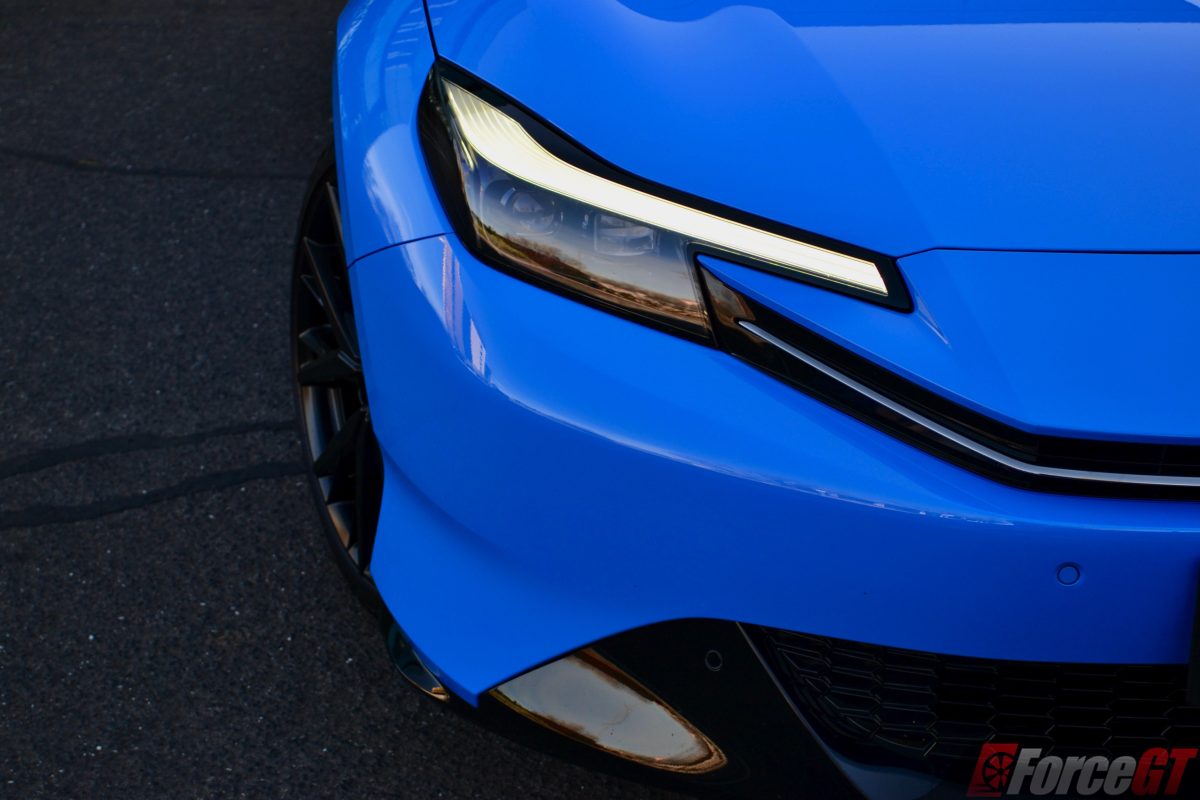
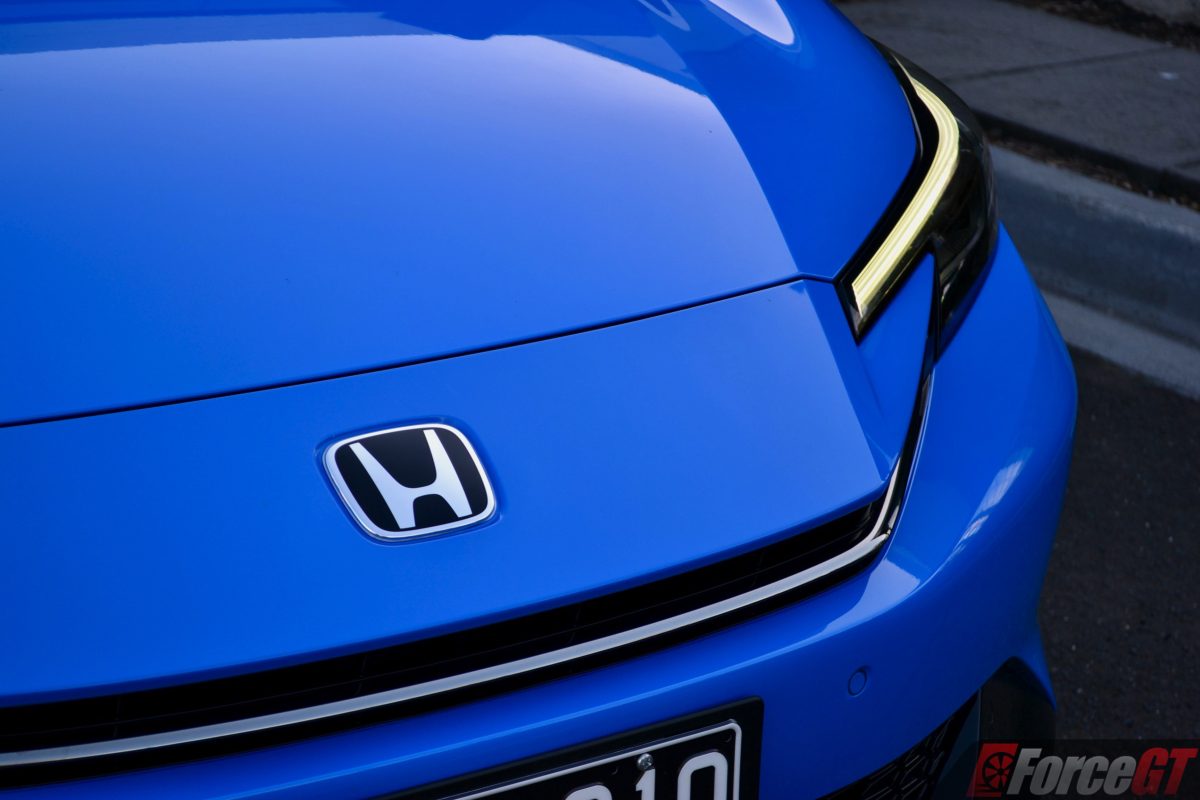
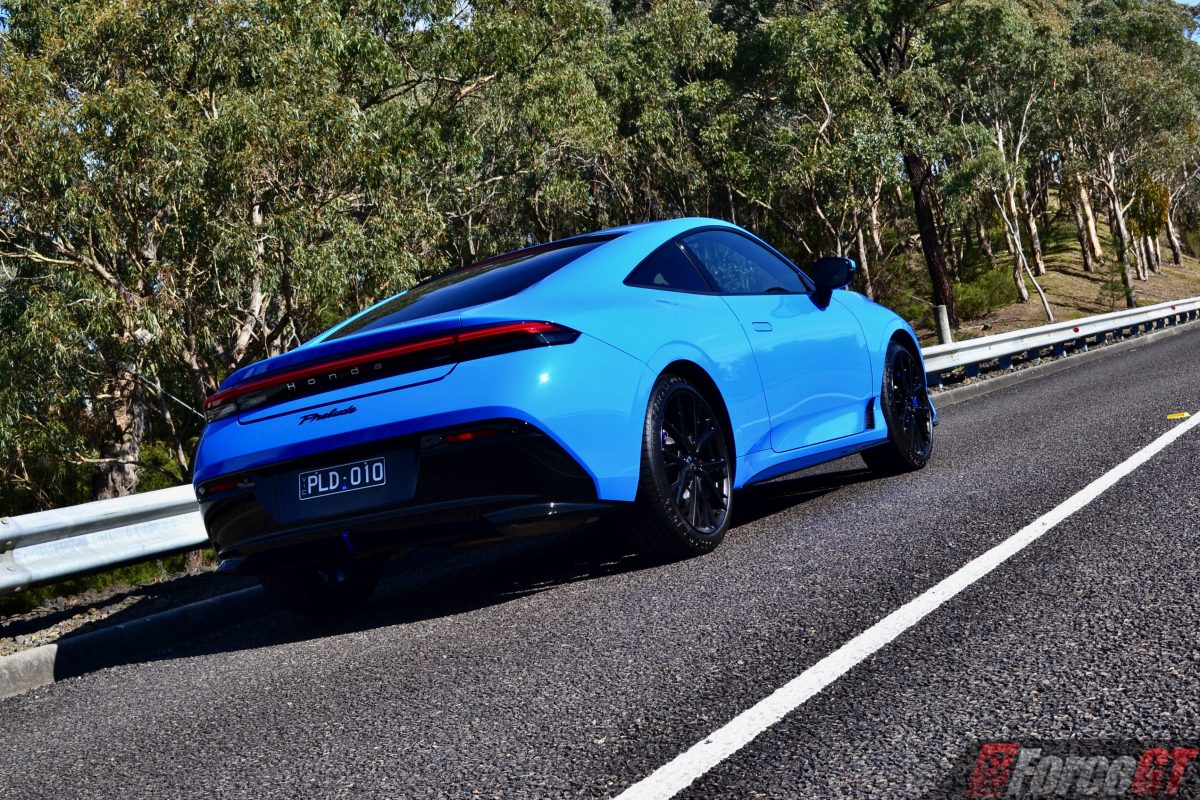
While cross-shopping the Prelude isn’t quite that straightforward, one thing is certain: it’s a very beautiful thing to look at. The sleek coupe body shape is tastefully sculpted for a truly sporty yet classy look. The clean design is devoid of any unnecessary clutter, fake vents or tacky bodykit. Instead, the styling adopts a retrained and understated approach resulting in a low and wide stance with smooth and flowing surfaces.
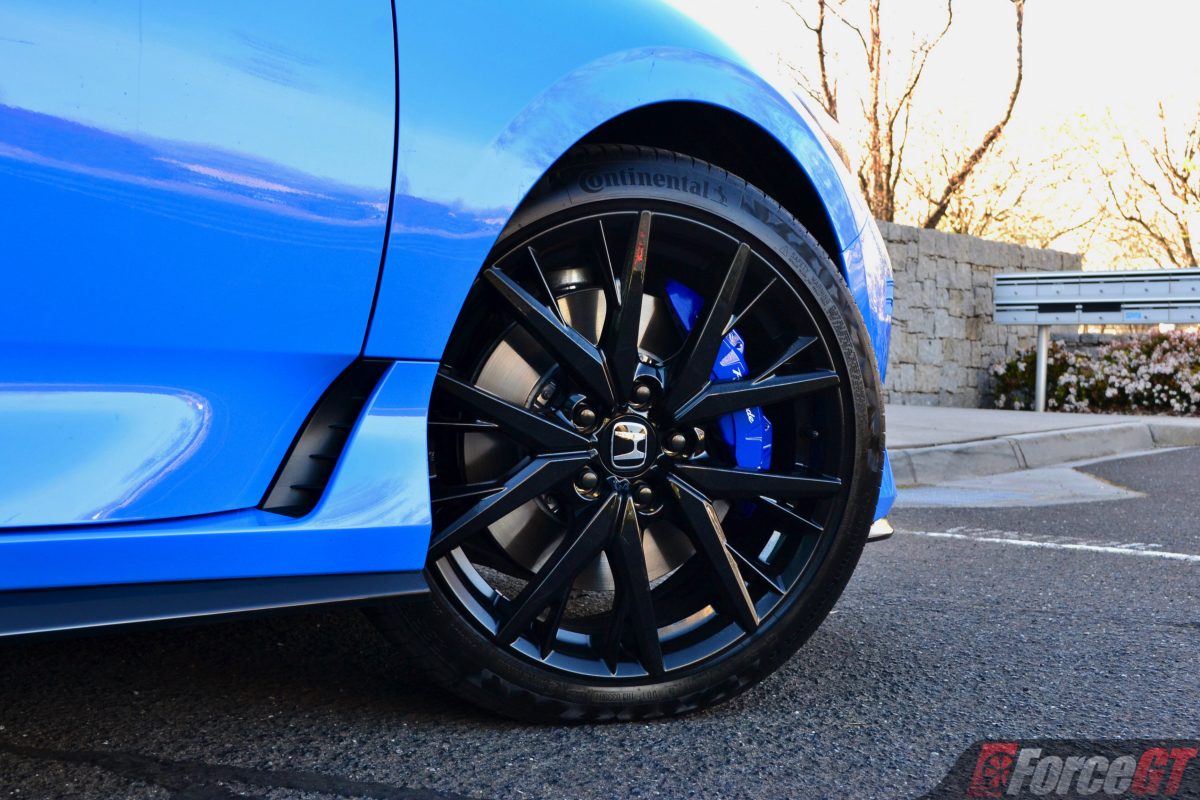
A slim blue accent strip in the lower front and rear bumpers is a distinctive design touch, which Honda says reinforces the car’s low-slung stance. The same blue hue is also applied to the brake calipers, creating a visual connection around the car.
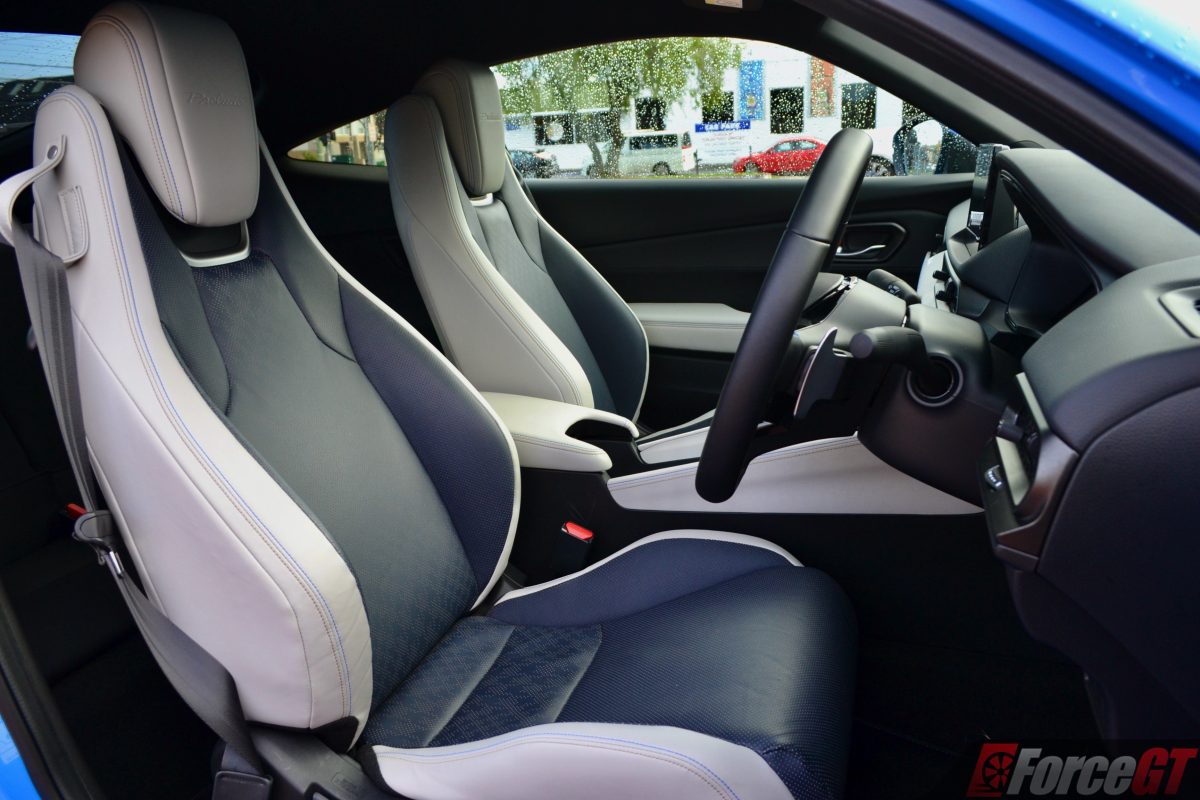
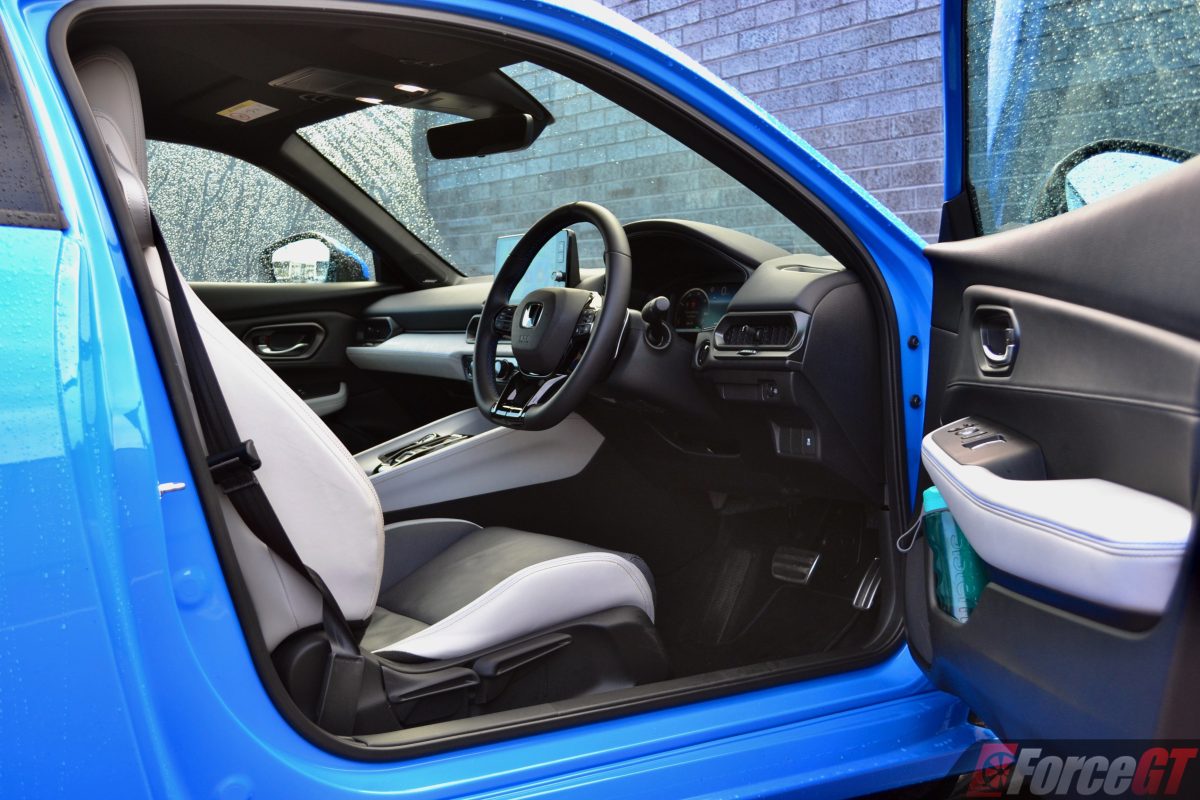
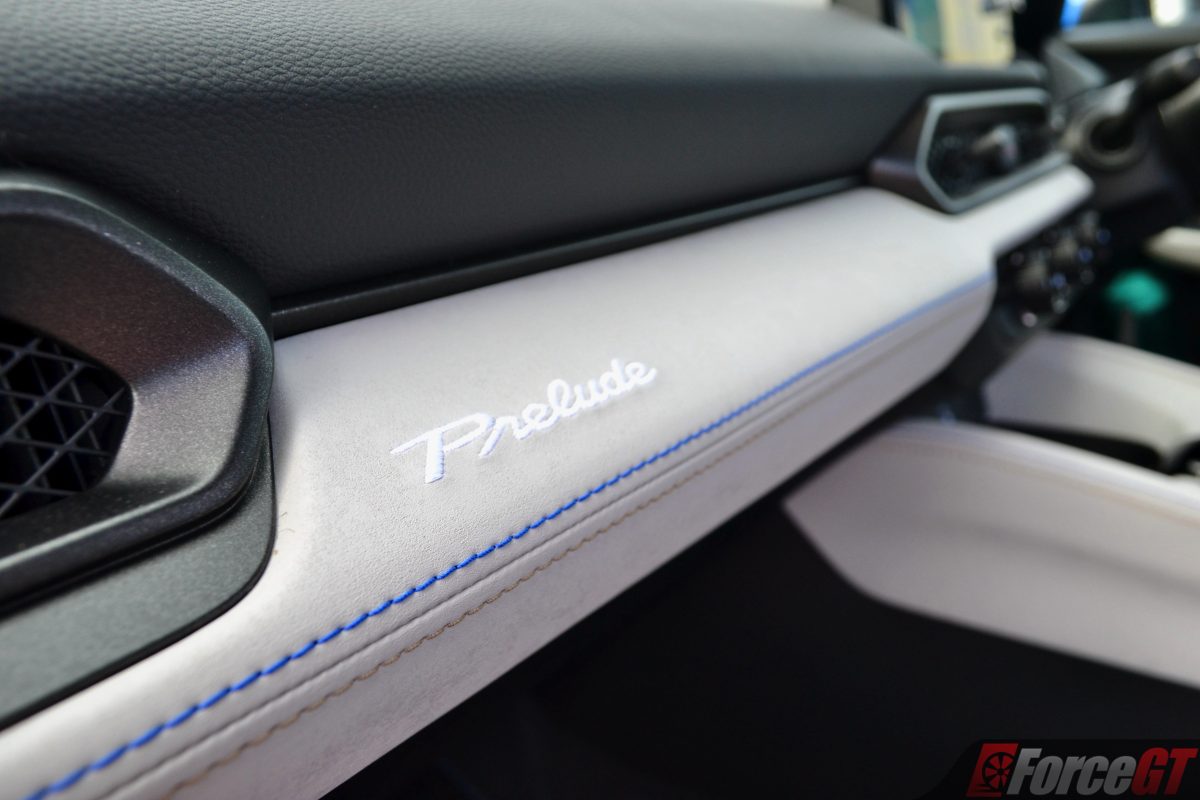
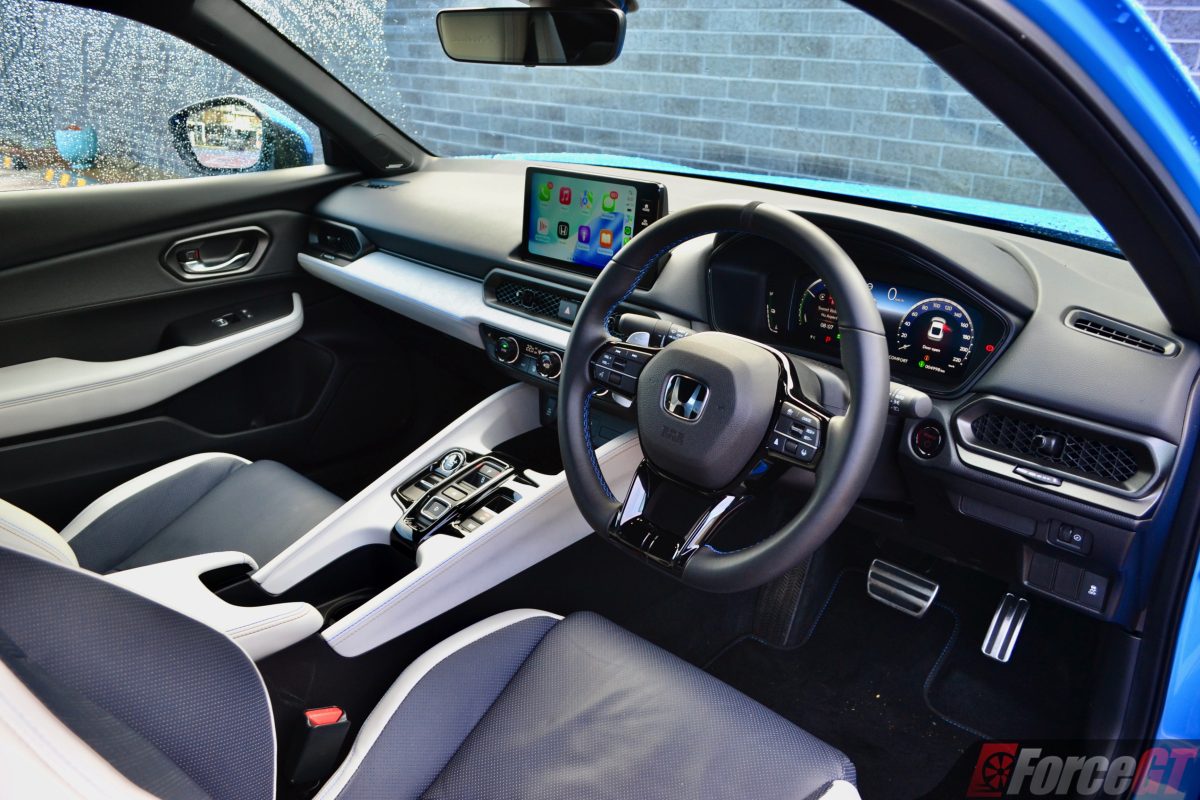
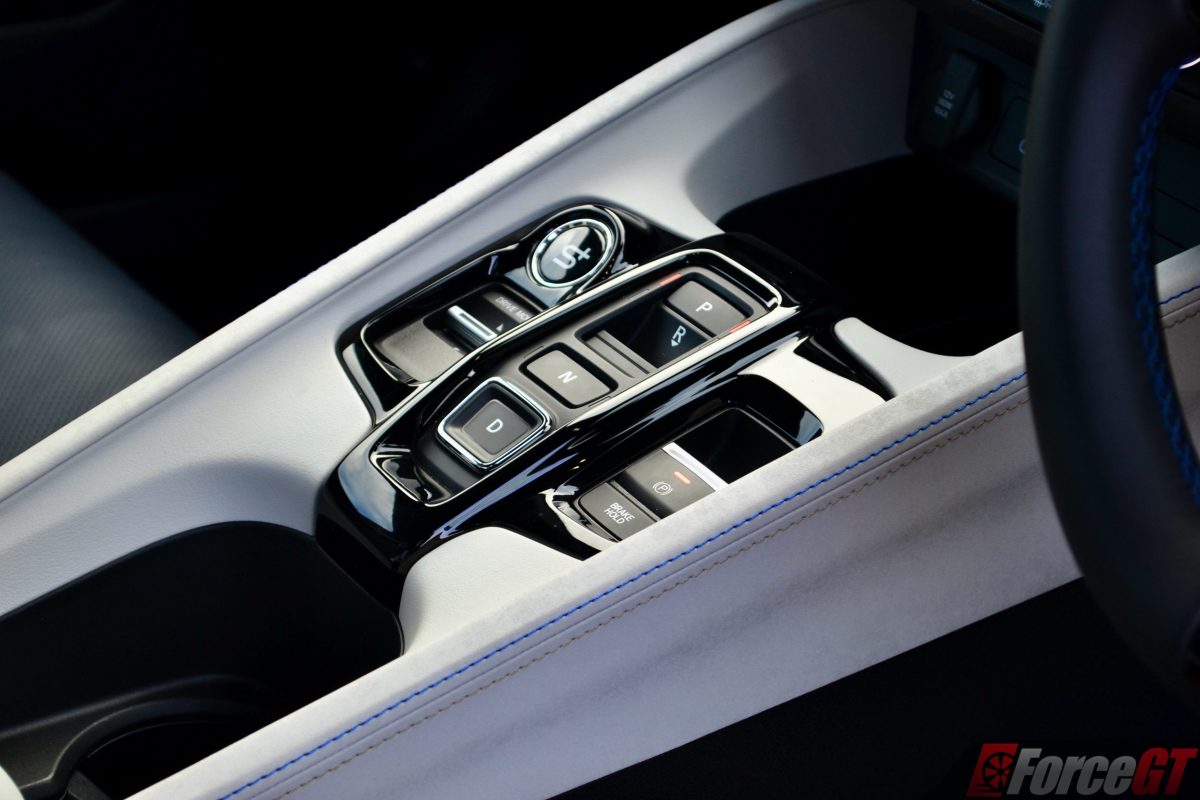
On the inside is where the higher sticker price over the GR86/BRZ is justified, to some extent at least. This is a much more refined and polished interior, even more so than the more expensive Mustang and Z. The mesh air vents are lovely, the switchgear are delicate and the gloss-black trims around the drive selector and steering wheel spoke are deep and rich. Tying everything together is the factory standard blue and white two-tone interior colour scheme, which gives the cabin a genuine premium vibe.
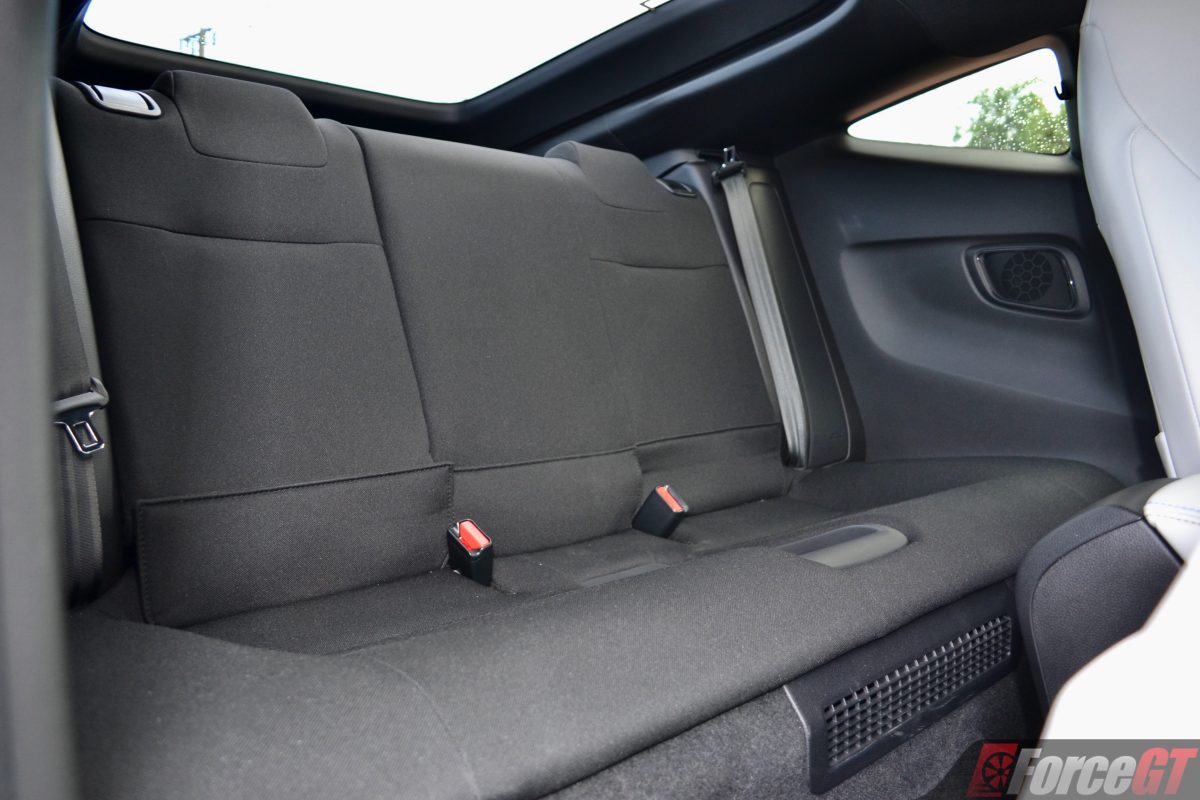
Yet, there’s room for improvement. The steering wheel has a 12-o’clock central strip, but it’s coloured black. Wouldn’t it be sportier if it was the same matching blue as the exterior bumper blue strip? Elsewhere, the back seats, unlike the front leather-appointed seats, are finished in bland, grey cloth. Although they are occasional seats in a car like the Prelude, they look starkly out of place compared with the upmarket front half of the cabin.
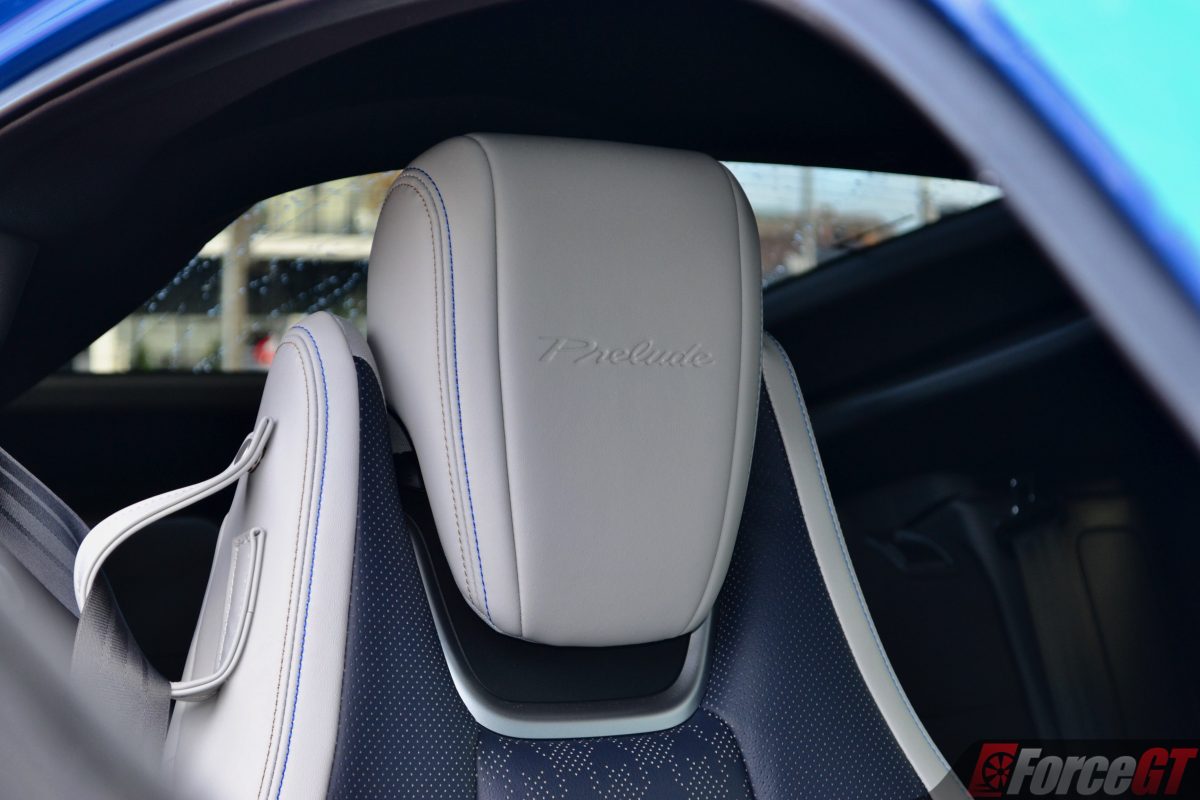
The front pews are thickly bolstered yet incredibly comfortable. It might not be obvious visually but the driver and front passenger seats are deliberately different in what Honda calls asymmetric front-seat design. The driver’s seat has firmer cushioning and stronger side bolster for greater support during spirited driving, while the passenger seat gets softer cushion with lower bolster for better comfort and easier entry and exit. Seat adjustment is fully manual which is just fine if it means saving weight to benefit handling.
The back seats are mainly for little kids, but with decent toe and knee room averaged sized adults can still come for a ride in them for short trips around town. Need to carry a few mates for a Saturday night out in town? Not a problem, just be mindful going over bumps as the lack of headroom back there literally means their scalps will be nearly brushing the rear glass.
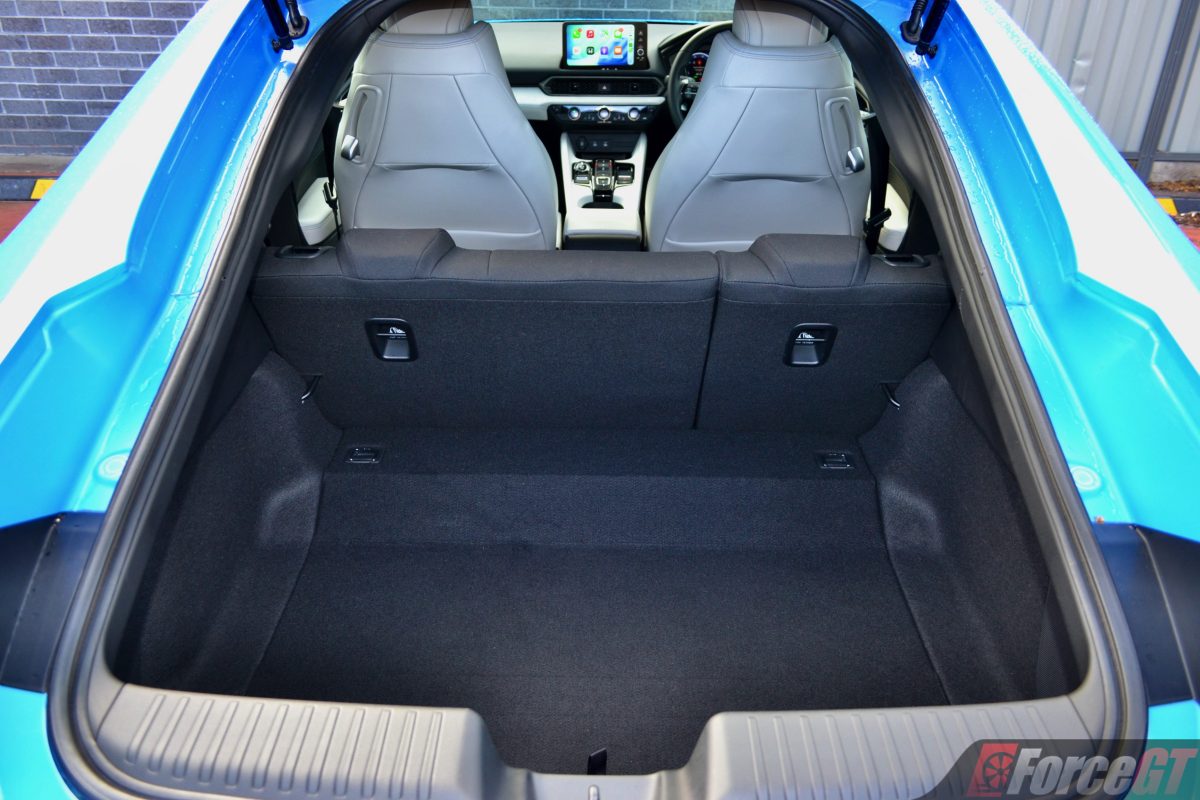
The boot measures 264 litres in capacity with the rear seats up, easily large enough for several small suitcases. With the rear seats folded, the space expands to 663 litres when measured to the window line, or 760 litres when measured to the roof. That’s more than enough space for a couple’s luggage for a full week getaway. The liftback design means the rear glass and tailgate lift together, creating a large opening that makes loading luggage surprisingly easy.
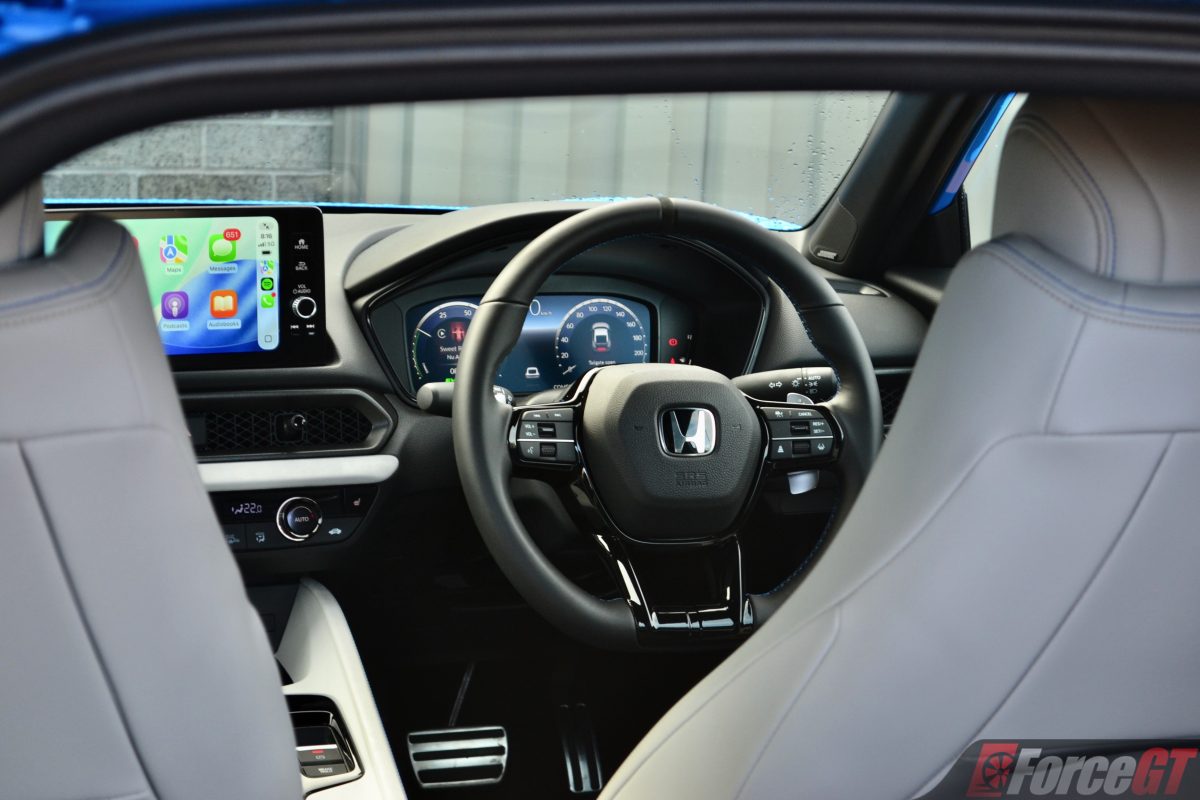
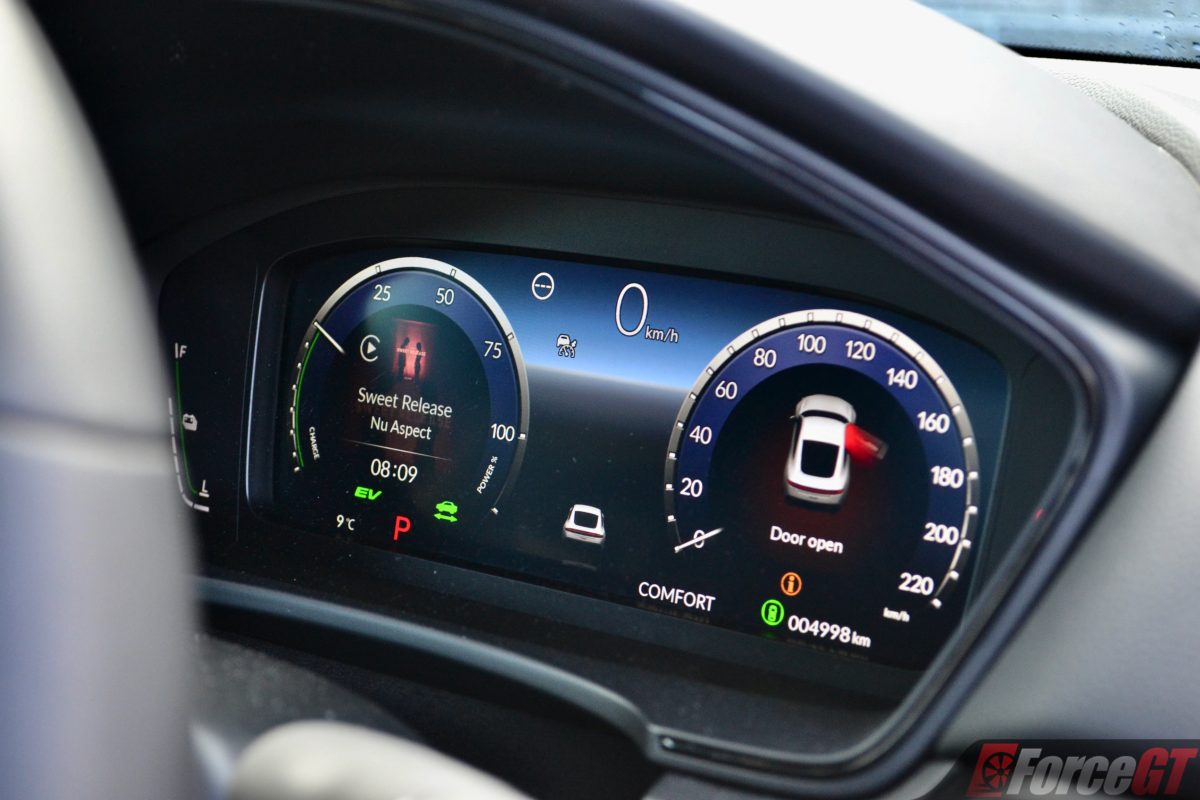
Tech wise, the interior features a 10.2-inch digital instrument cluster with limited customisability. It’s good to see critical information like the fuel gauge, battery charge level and warning and fault lights still utilising physical analogue readouts separate to the digital display. In case of a digital display malfunction, at the very least you’re not driving blind.
The central infotainment system uses a smaller 9-inch touchscreen display which seems a bit odd, this display is usually the largest screen in the dashboard. It’d make quite a difference to both usability and presentation if the screen size was at least an inch larger, matching the digital instrument cluster.
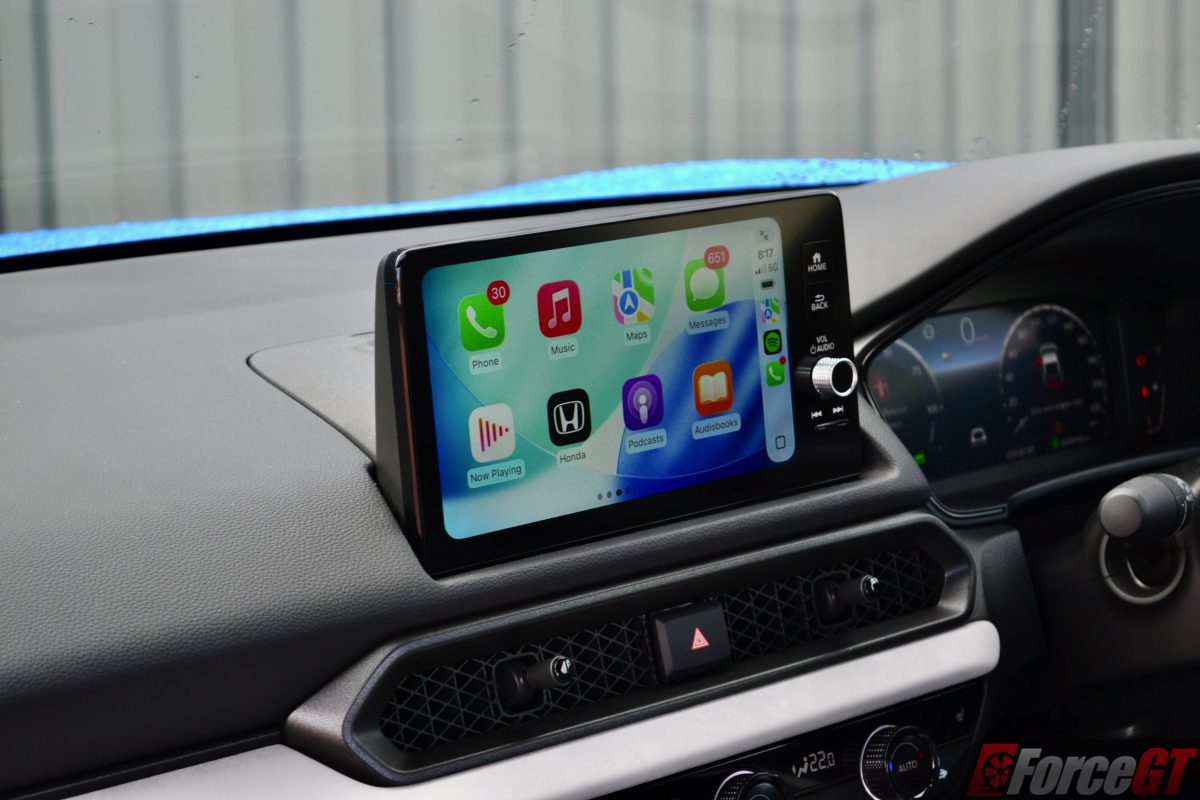
That said, the touchscreen’s underlying software is up-to-date, with support for Apple CarPlay and Android Auto, both wirelessly, along with built-in Google which integrates Google Maps, Google Assistant and Google Play. With straightforward menu structures and a small pool of physical controls next to the display, the interface is super intuitive. It’s just lacking a little on-screen real estate.
Physical controls are also available for the climate control and seat heating functions which is very convenient. This is a rarity these days with many manufacturers digitising most controls in the central touchscreen.
Where urgent improvement is needed is the very poor night-time video quality from the reverse view camera. It’s grainy and blurry, certainly a lot to catch up to those higher quality camera systems found in other bands. There’s also no 360-degree surround-view camera.
Onto the oily (and not so oily) bits, the Prelude is powered by a 2.0-litre petrol-electric hybrid powertrain which it shares with the Civic e:HEV. The naturally aspirated, Atkinson-cycle four-cylinder engine produces 104kW and 186Nm, while the pair of electric drive motors output a combined 135kW and 315Nm. Drive is channeled to the front wheels via an e-CVT automatic.
While those figures aren’t much to shout about and its official zero to 100km/h sprint time of 8.2 seconds isn’t going to set the road on fire, in real-world driving things are rather different. For starters, it’s a little quicker than Honda thinks it is, with it stopping our clock in just under 8 seconds in the century sprint. Then there’s the heightened sense of speed that it provides. It feels as though the engineers have dialled in the sweet spot in cabin sound deadening for it to be quiet enough without isolating too much of the outside world. Add in that suitably enthusiastic sound track from the engine, it feels quick, even if it’s not that quick by the clock.
And that sets the precedent for the rest of the driving experience. For any keen driver, a mere 10 minutes behind the wheel through a good stretch of back roads is all it takes to discover just how perfectly honed the Prelude is. From the delightfully quick and precise steering to the taut and rigid chassis, the Prelude is a very well-sorted driver’s car. Despite being front-wheel drive, the nose is incredibly locked down. In fact, there’s virtually no understeer. Such is the amount of grip up front that it just never gives up tracing your intended line. It allows for super quick direction changes, too.
For setting quick lap times around a race track, the Prelude may not be the car for it, but for a genuinely fun drive around some great roads, it’s one of the best cars to take. And don’t think there’s a lack of pace on offer. Once off the line, the Prelude is brisk. This is a car that could easily keep up with the likes of WRX and Civic Type R through the bends.
A quick dive into the Prelude’s underpinnings uncovers the secret to its handling prowess. It shares quite a lot of chassis components with the almighty Civic Type R, including the dual-axis front suspension, multi-link rear suspension, adaptive dampers, Brembo four-piston front brakes and electric power steering. But more than just simply transplanting the Type R’s chassis, Honda says it has retuned the components specifically to suit the Prelude’s sports touring characteristic.
Indeed, the Prelude has its own distinctive driving feel. Without a third pedal, the drive is more relaxed. But the e-CVT has a trick to ensure driving engagement. It’s called the S+ Shift mode which simulates eight ‘ratios’ in the continuously variable transmission. As gimmicky as it might sound, it does actually work. The steering wheel paddle shifters are used to change ‘gears’, and the e-CVT holds at a fixed ratio, allowing engine speed to climb until the next ‘gear’ is selected. When upshifting the system briefly cuts engine speed to reproduce the sensation of a gear change. During a downshift, it even blips the throttle to rev match. It does behave very much like a conventional multi-speed gearbox.
The three-setting adaptive dampers also give the Prelude its own unique personality. In the firmest Sport setting the chassis becomes more responsive to inputs but the ride is never harsh, and in the softest Comfort setting the ride quality is just sublime without diluting much of the handling. The GT mode is a nice balanced middle ground setting. The way the Prelude expertly despatches bumps and ruts can even put some family SUVs to shame. This is a very comfortable coupe to be cruising around in.
The hybrid powertrain gives excellent fuel economy. Our tested real-world combined average of 4.9L/100km is just a shy off the rated 4.3L/100km. For a sports car, this is as good as it can get. It also only needs RON91 unleaded fuel which makes it very economical to run.
The Prelude is comprehensively equipped with Honda’s Sensing suite of driving assistance which includes Forward Collision Warning, Lane Departure Warning, Lane Keep Assist System, Adaptive Cruise Control with Low-Speed Follow, Traffic Sign Recognition, High Beam Support System, Blind Spot Monitoring and Rear Cross Traffic Alert. It has 10 airbags including driver and passenger knee airbags.
Verdict
Design & Comfort
Performance & Handling
Quality
Economy
Equipment & Features
OUR SCORE
4.3/5
+ Plus
- Stylish coupe design
- Premium cabin vibe
- Superb handling
- Sublime ride quality
– Minus
- Bland cloth rear seats
- Small-ish infotainment touchscreen
- No surround view camera
- Could do with more power
Overall
Honda has left no stone unturned with the new sixth generation Prelude. As a sporty, premium feel grand-touring coupe that is as much fun to drive in the twisties as it is comfortable around town, there really isn’t anything that comes close to the Prelude around the $60k mark. It’s that good. Perhaps a 15-20kW lift in power would’ve brought the Prelude closer to perfection, but that’s just being picky.
2026 Honda Prelude e:HEV pricing and specification
| Price (Drive away): | $65,000 |
| Warranty: | 5 years/unlimited kilometre |
| Warranty Customer Assistance: | 5 years roadside |
| Service Intervals: | 12 months/10,000km |
| Country of Origin: | Japan |
| Power Unit: | 2.0-litre aspirated direct-injected in-line four-cylinder petrol engine:
104kW @ 6,000rpm, 186Nm @ 4,500rpm Electric motor, Lithium Ion battery: 135kW, 315Nm |
| Transmission: | Continuously Variable Transmission (e-CVT) |
| Drivetrain: | Front-wheel drive |
| Body: | 2-door coupe, 4-seats |
| Dimensions (L/W/H/W-B): | 4,522/1,880/1,355/2,605 |
| Kerb Weight (kg): | 1,468 |